|
|
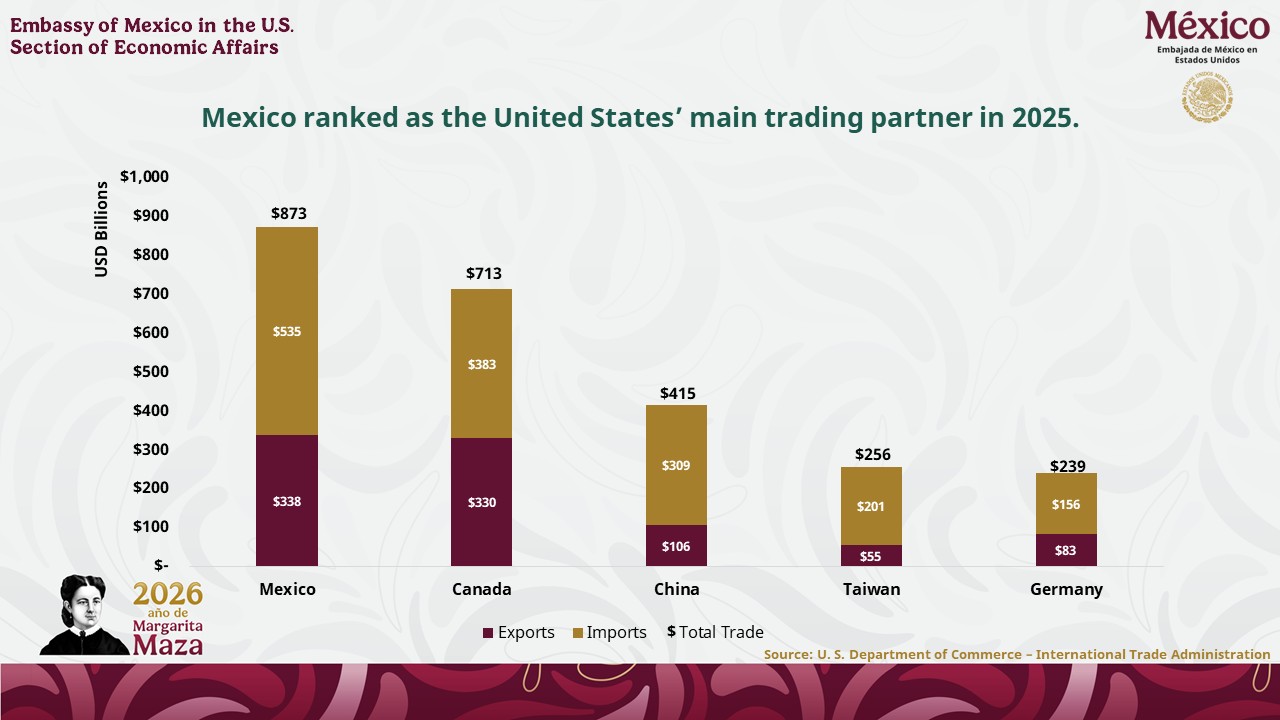
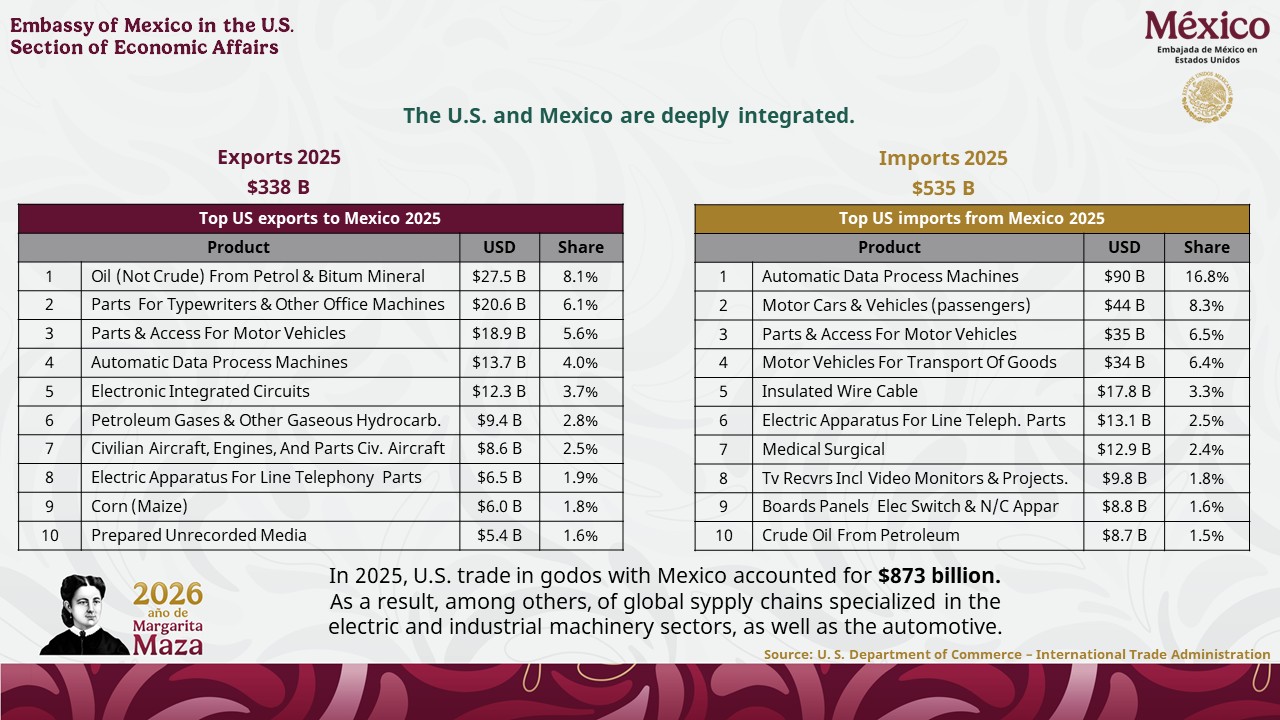
The U.S. – Mexico economic relationship is one of the world's most dynamic and integrated partnerships. In 2025, total trade between Mexico and the U.S. reached $873 billion, an increase of 4% compared to 2024, setting a new historical high level, making Mexico the United States’ most important export destination, supplier, and trading partner.
|
|
|
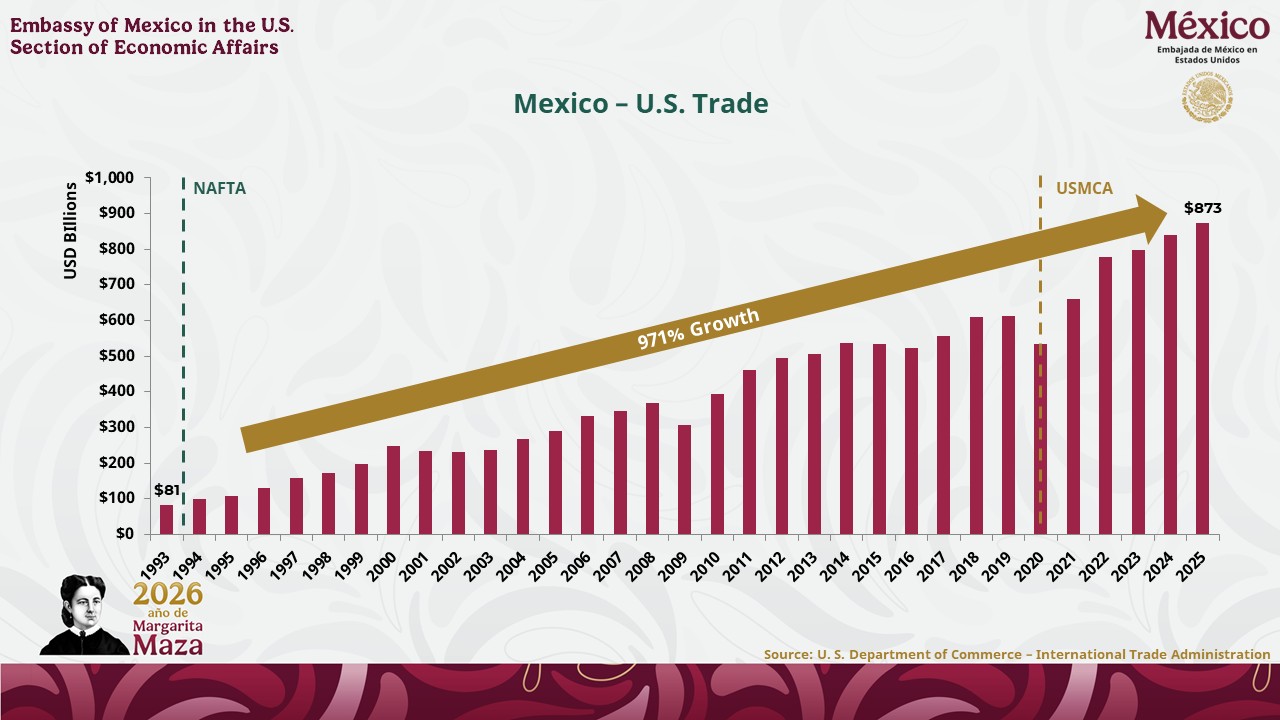
The U.S.- Mexico trade relationship is essential for both economies. Last year, our bilateral trade reached $873 billion, 10 times bigger than before NAFTA. US exports to Mexico have multiplied by ten. Mexico and the U.S. trade over $1.6 million in products every minute. Trade between Mexico and the U.S. is greater than U.S. trade with Japan, Germany, South Korea, and the United Kingdom combined.
|
|
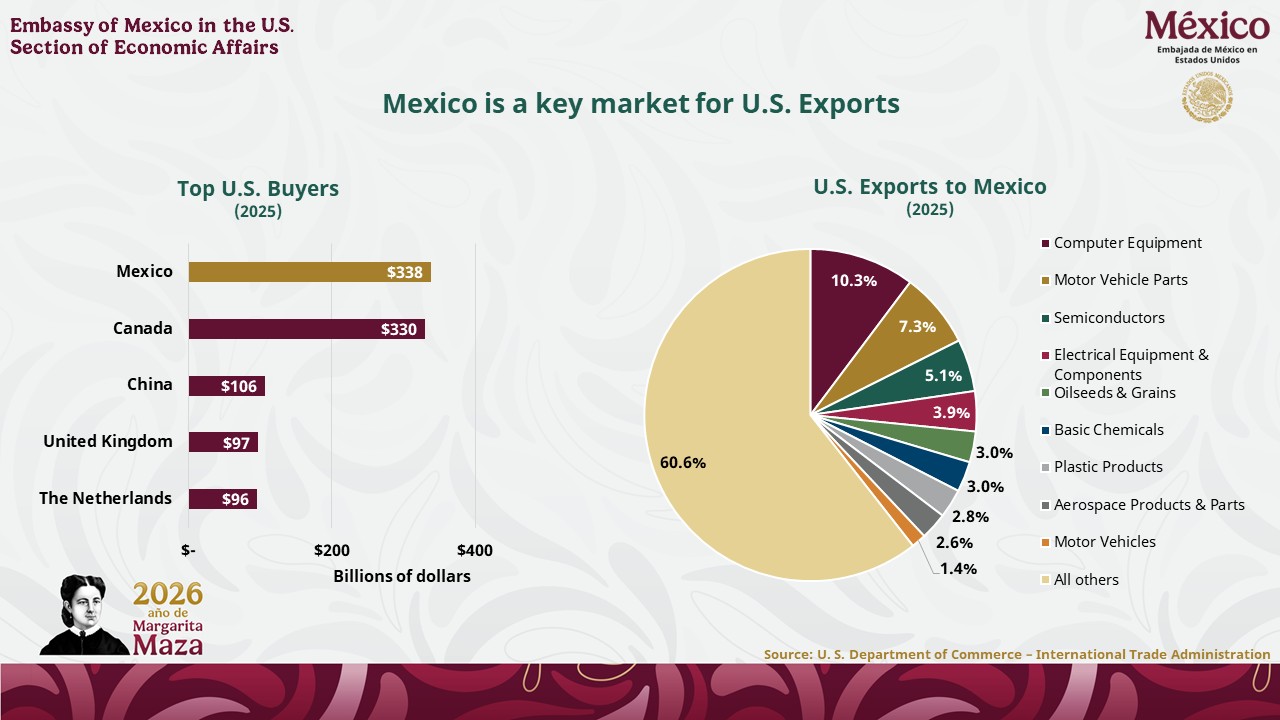
For the first time in history, Mexico ranked as the United States’ largest export market. In fact, Mexico buys 16% of all US exports. This means that Mexico buys more products from the US than Japan, South Korea, Taiwan, Singapore, and Hong Kong combined.
|
|
|
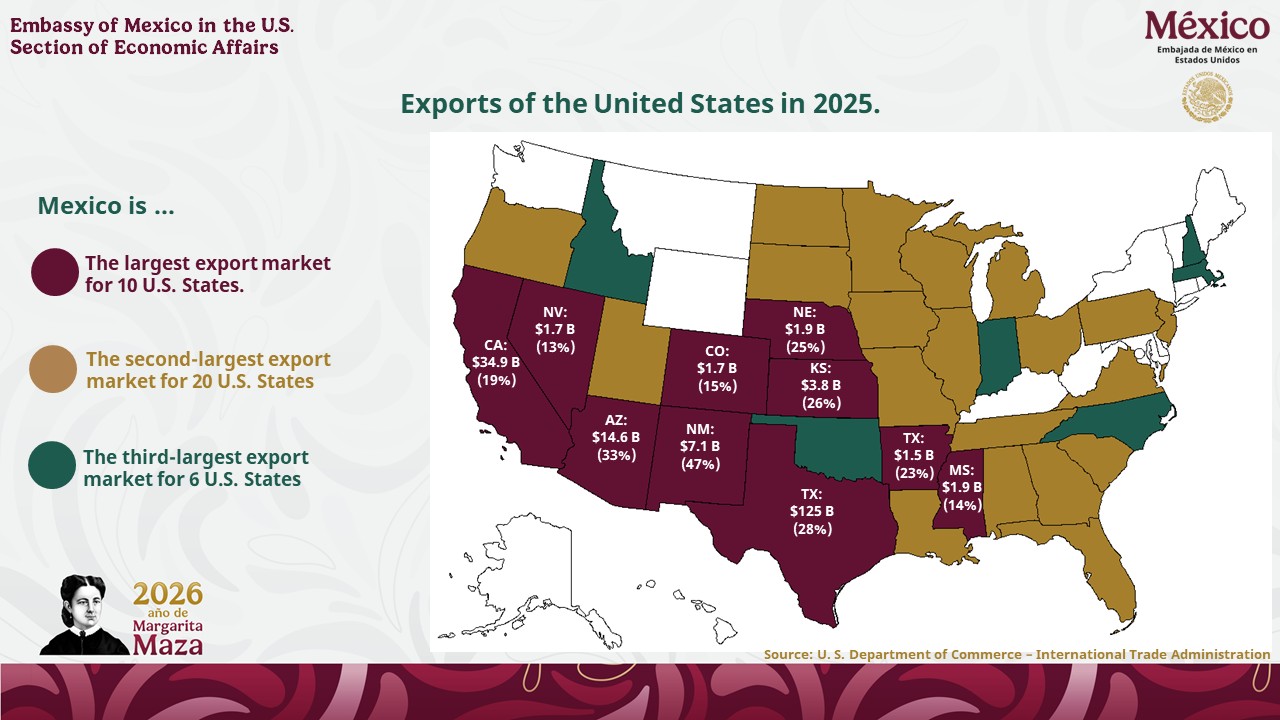
Trade with Mexico benefits the United States, as Mexico is an increasingly important market for more states’ exports. Mexico is the largest export market for 10 US states, the second largest for 20 states, and the third largest for another six states.
Before NAFTA, almost three decades ago, Mexico was the most important export market for only two states: Texas and Arizona. Currently, Mexico is also the top buyer for products from Arkansas, California, Colorado, Kansas, Mississippi, Nebraska, Nevada, and New Mexico.
|
|
|
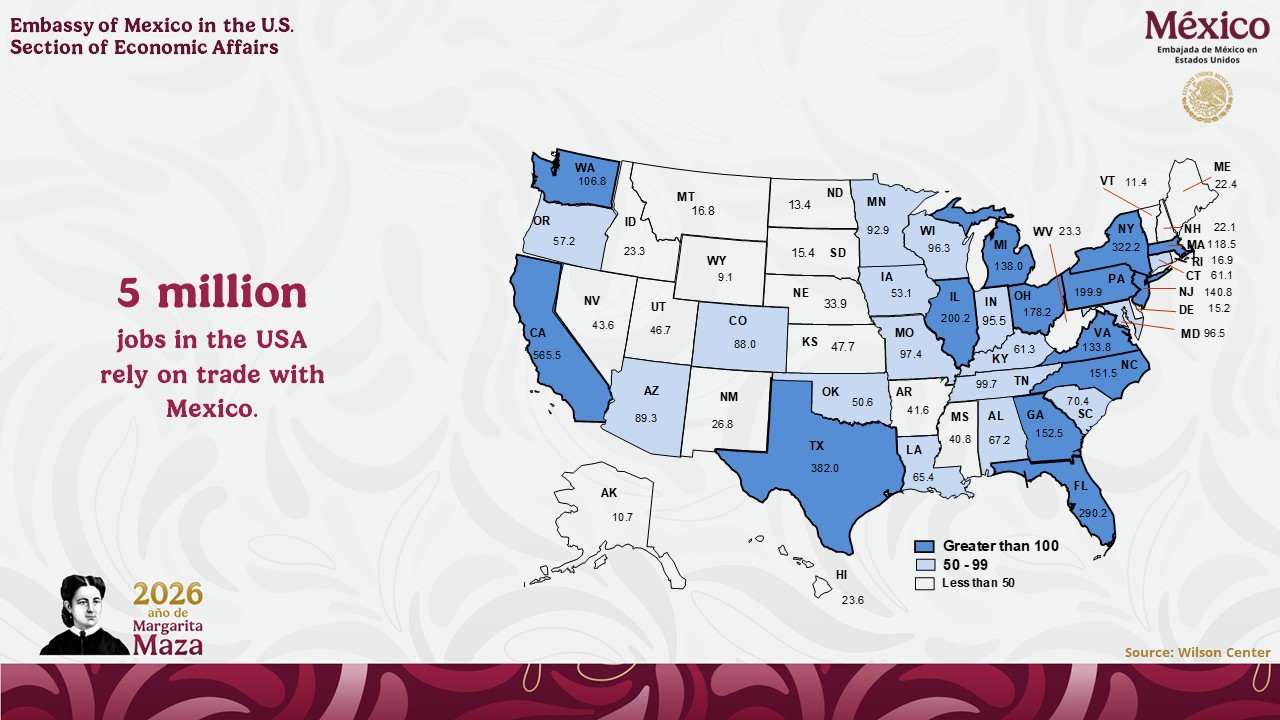
Trade with Mexico supports five million jobs across the US. In every state, workers produce raw materials, goods, and services for the Mexican economy and provide services to bring final consumer products from Mexico to the supermarkets and Mexican-made components and parts for further processing in US industrial plants. Therefore, Mexico and the U.S. make things together, supporting local jobs.
|
|
|
Over three decades of enjoying preferential market access, Mexico and the US have developed highly integrated economic ties across multiple industries.
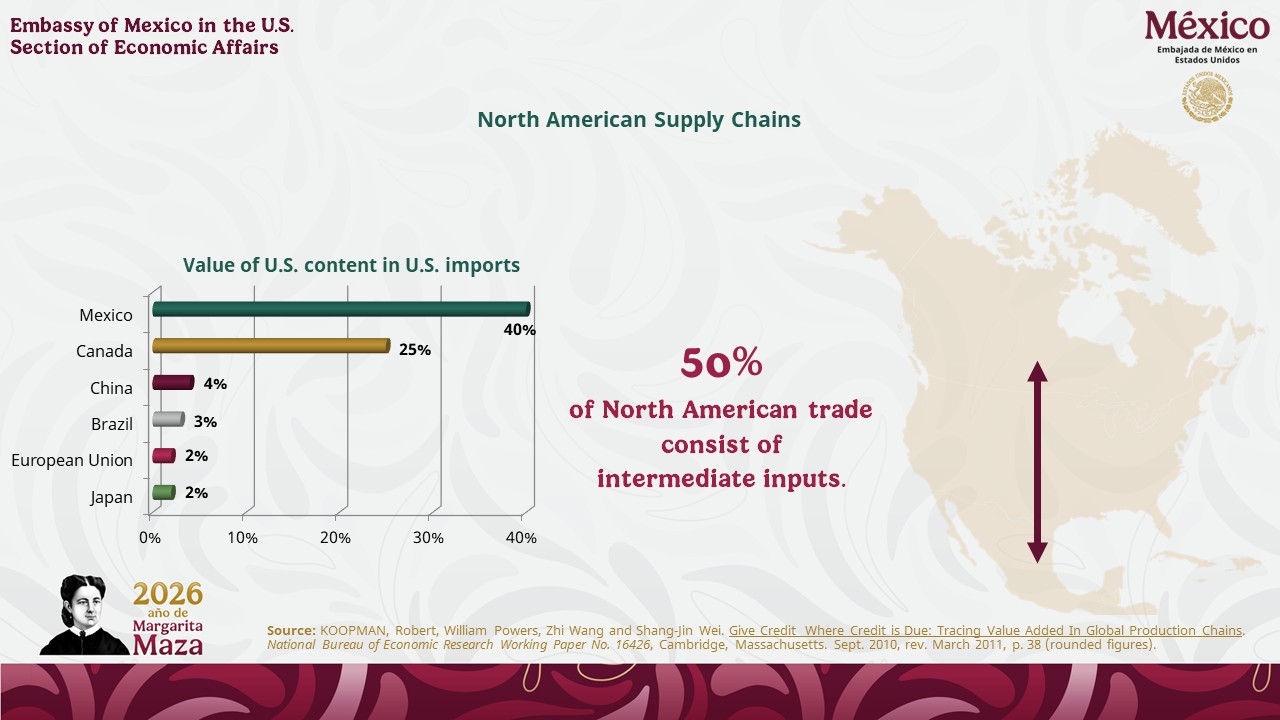
Did you know that about 40% of the final Mexican exports to the U.S. are U.S.-made content? This means we produce together. In addition, 50% of North American trade consists of intermediate goods, where parts and components cross the border back and forth several times before the final product is assembled.
|
|
|
Over the past three decades, Mexico and the United States have built a deeply integrated manufacturing platform in North America. Bilateral trade is not simply an exchange of finished goods, but a reflection of shared production processes in which components, parts, and inputs cross the border multiple times before a final product is completed. This high level of integration is especially visible in sectors such as automotive, electronics, machinery, aerospace, and medical devices. As a result, trade between Mexico and the U.S. strengthens the competitiveness of both economies, supports jobs on both sides of the border, and reinforces North America’s position as a strategic production hub.
|
 |
Mexico has attracted the attention of companies around the world because:
- Geographic location
- Wide network of free trade agreements, particularly the USMCA
- Macroeconomic stability
- North American supply chains
- Highly skilled labor force
- Shares with the U.S., the most dynamic border in the world
Mexico and the United States share the same economic growth goals, so we have aligned our goals toward strategic industries.
|
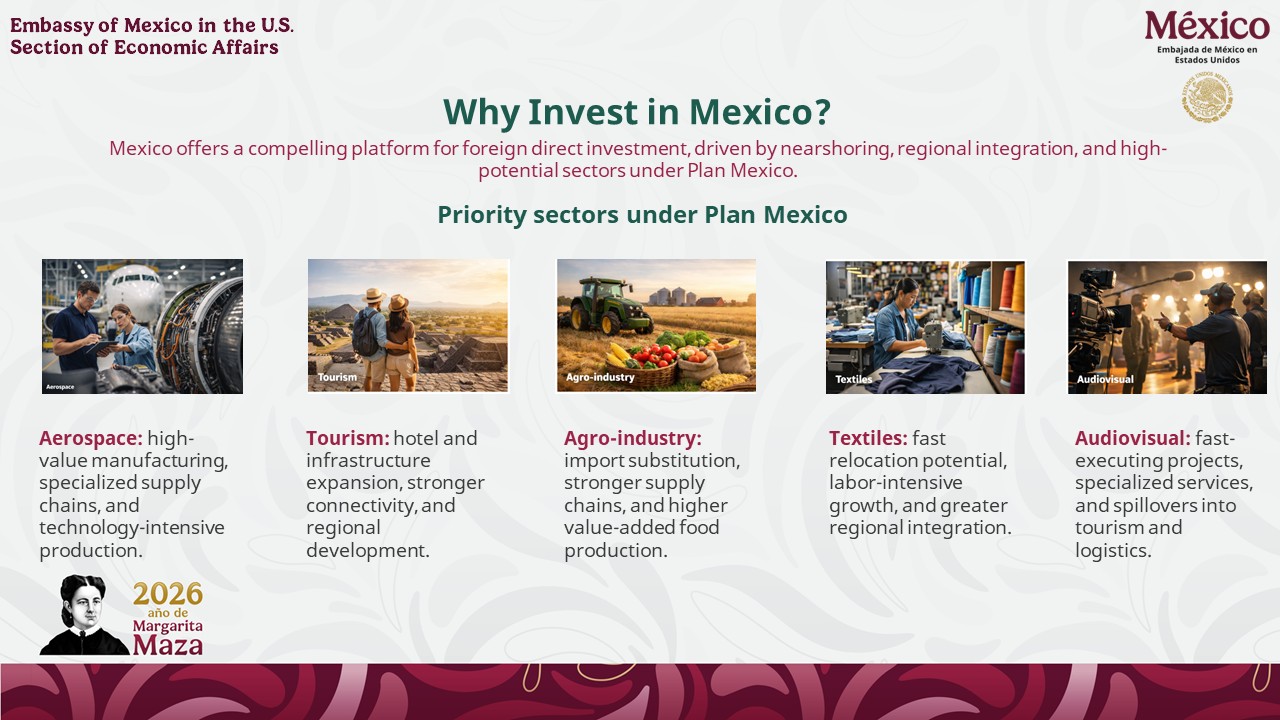 |
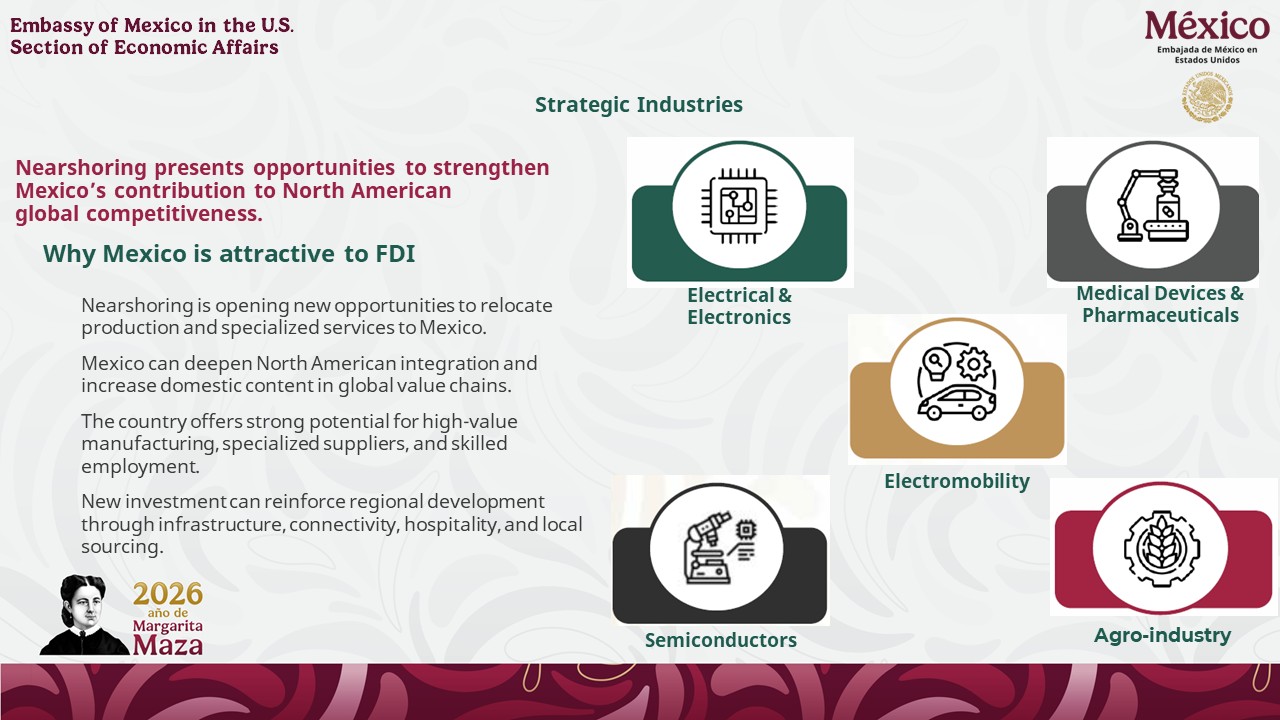
Mexico offers a strong platform for foreign direct investment because it combines geographic proximity to the United States with industrial capacity, regional integration, and opportunities created by nearshoring. Under Plan México, the country is prioritizing sectors with strong growth potential and direct relevance for North American competitiveness. These include aerospace, with opportunities in high-value manufacturing and specialized supply chains; tourism, through hotel, infrastructure, and connectivity projects; agro-industry, by strengthening supply chains and expanding higher value-added food production; textiles, with rapid relocation potential and strong employment generation; and audiovisual industries, where investment can be deployed quickly and generate spillover benefits in services, logistics, and tourism. Together, these sectors show why Mexico is an attractive destination for investment linked to production, innovation, and regional development.
|
Do you want to learn more? Check out this presentation
Learn more about US - Mexico trade by states with these factsheets
Section of Economic Affairs
|