|
|
 |
|
The newsletter of the Embassy of Mexico in Denmark
|
|
|
Monthly Newsletter CV. September 2026
|
|
|
Visit by Undersecretary Jorge Marcial Islas Samperio to Denmark
|
|
|
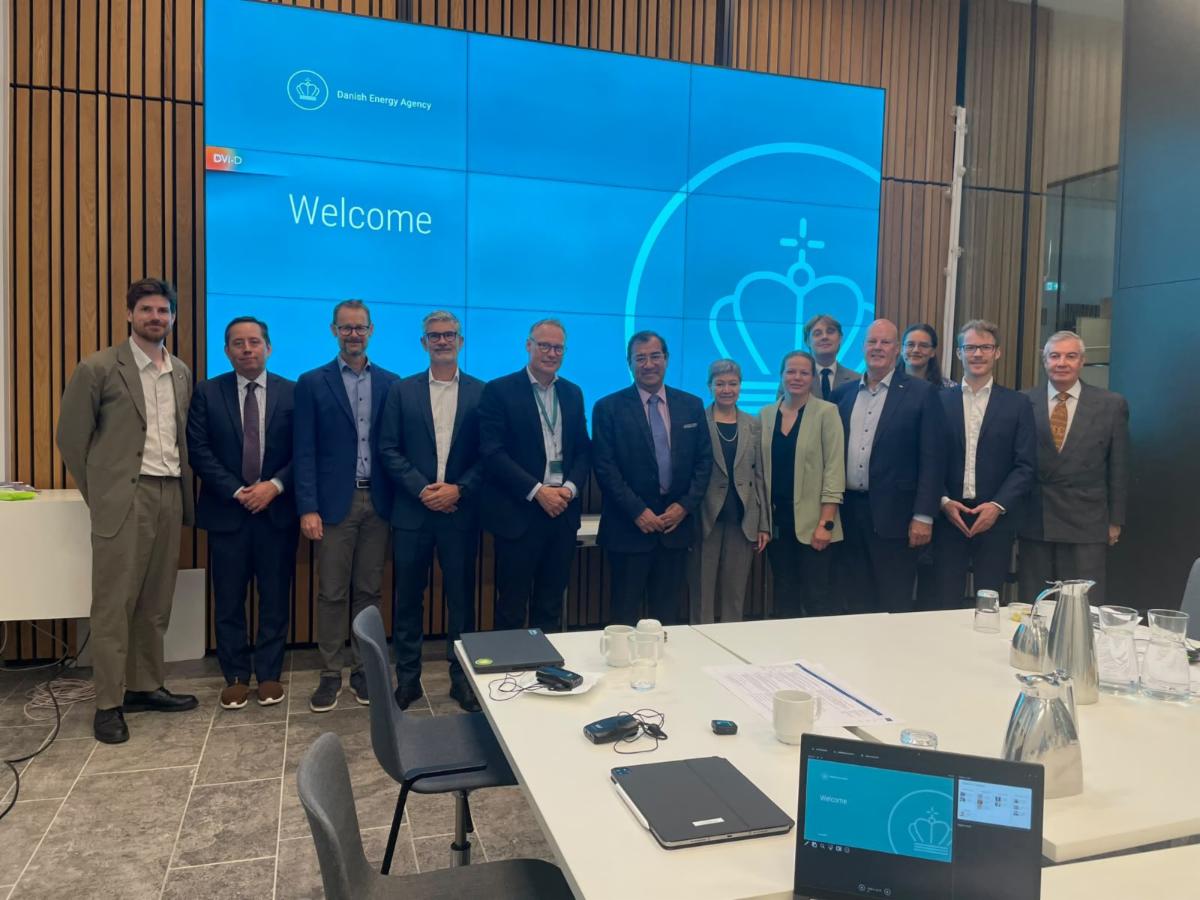
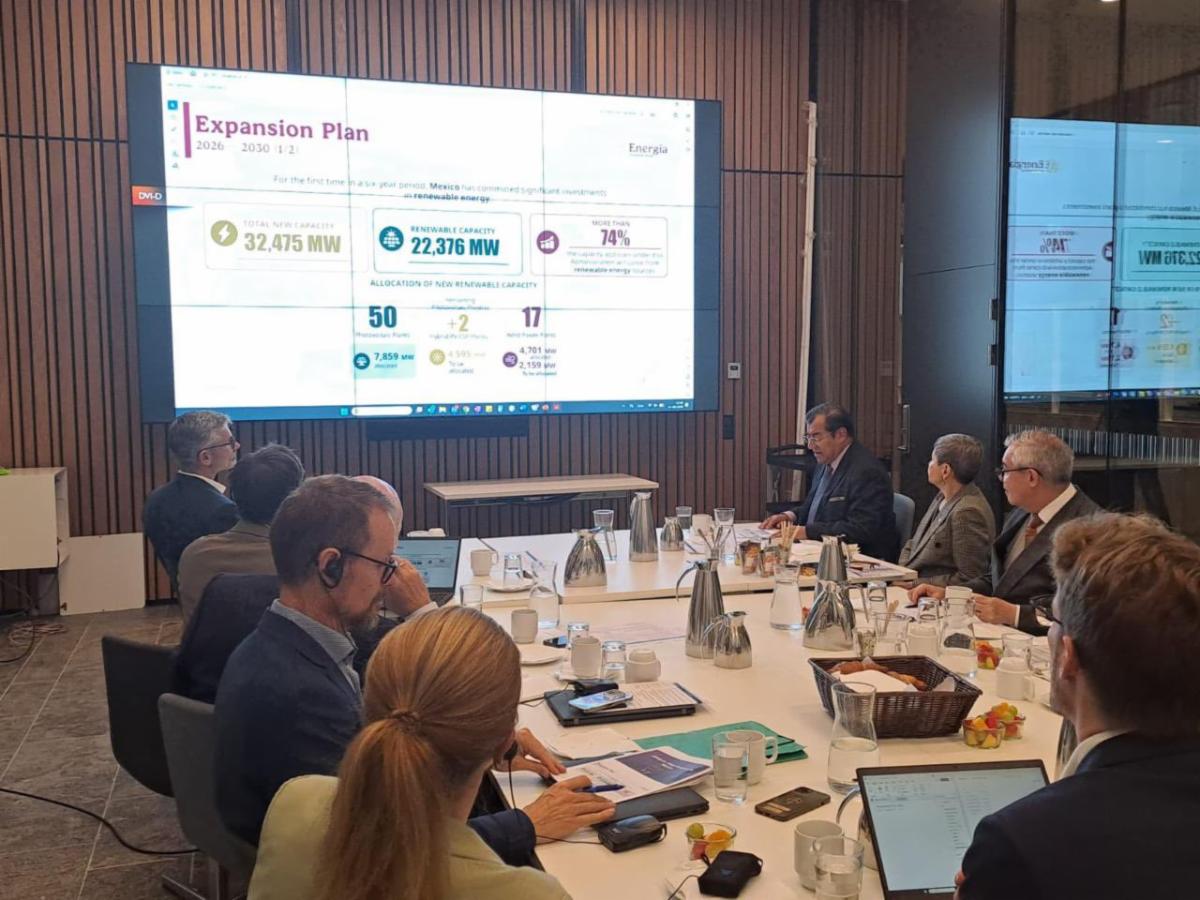
Dr. Jorge Marcial Islas Samperio, Undersecretary for Planning and Energy Transition at the Ministry of Energy, visited Denmark on September 14 and 15.
During the visit, he met with officials from the Danish Energy Agency, the Ministry of Foreign Affairs, and the Danish Metalworkers' Union (Dansk Metal). He also had the opportunity to visit the offshore wind division of Vestas Wind Systems and the Lindø Offshore Renewables Center.
|
|
|
Meeting with the Chair of the Parliamentary Foreign Affairs Committee
|
|
|
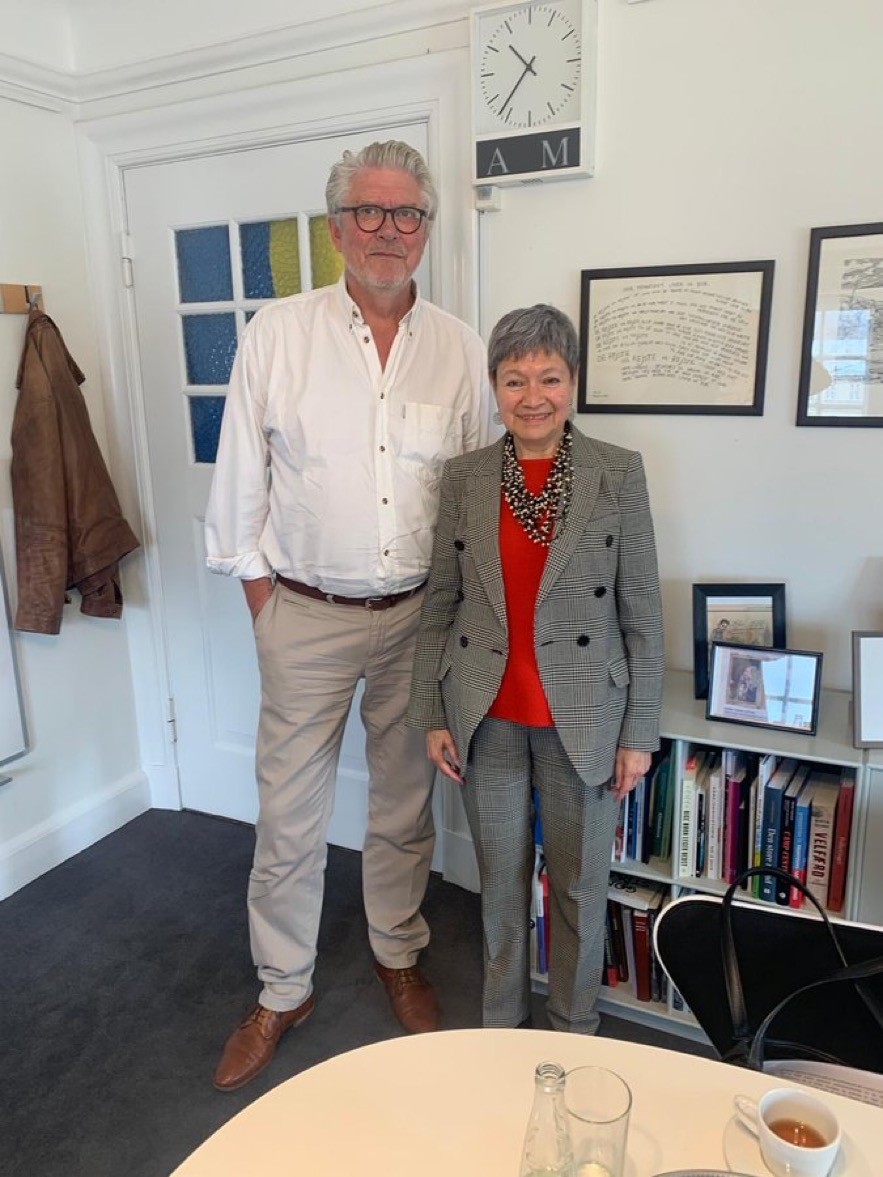
On September 2, Ambassador Pensado met with Karsten Hønge, the new Chair of the Danish Parliament's Foreign Affairs Committee.
The meeting provided an opportunity for an extensive exchange of views on matters of mutual interest, particularly the complex global geopolitical landscape.
Discussions also covered the recent signing of the Modernized Global Agreement (MGA) between Mexico and the European Union and the importance of concluding the ratification process as soon as possible.
Additionally, the upcoming 2027 bicentennial of the establishment of diplomatic relations between the two countries was addressed, and the program currently being prepared jointly with the Danish Foreign Ministry was briefly outlined.
|
|
|
Investment Promotion Seminar. Visit by the Invest Monterrey Delegation to Copenhagen
|
|
|
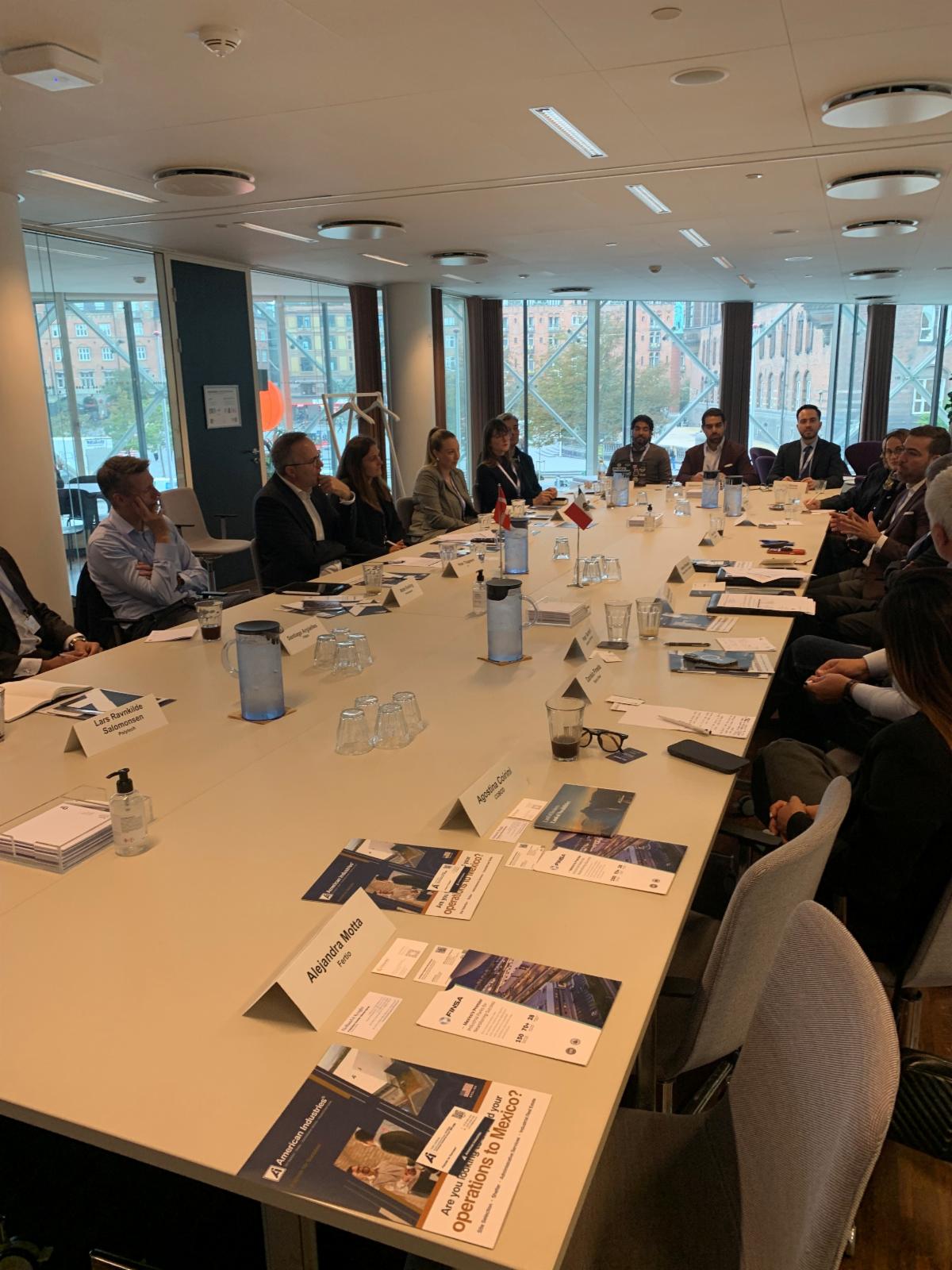
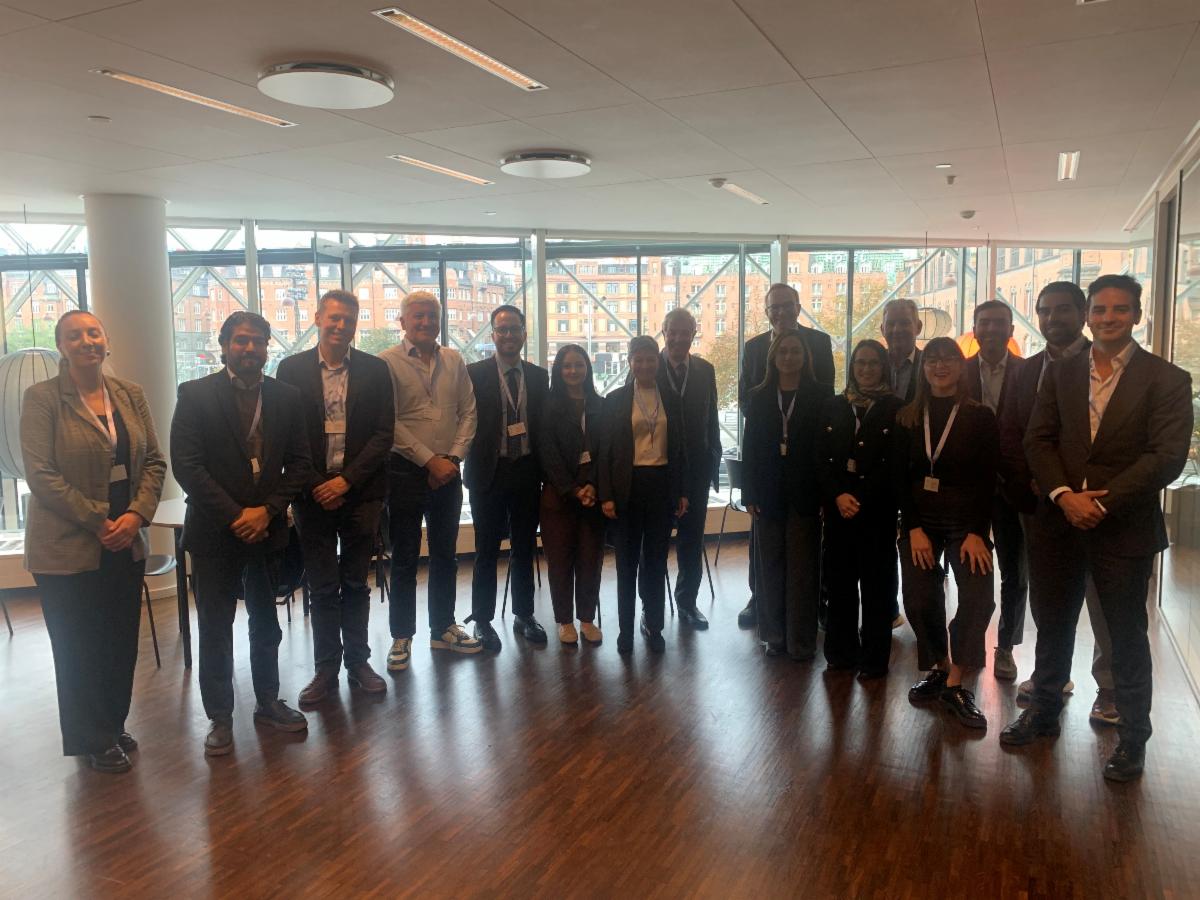
On September 11, an investment promotion seminar was held at the headquarters of Dansk Industri (DI)—Denmark’s leading confederation of Danish businesses—on occasion of the visit of an Invest Monterrey delegation.
DI and Invest Monterrey jointly organized the event, with the participation and support of this Embassy.
|
|
|
Mexico’s Participation in the High Ambition Coalition’s Informal Meeting on the Plastics Treaty
|
|
|
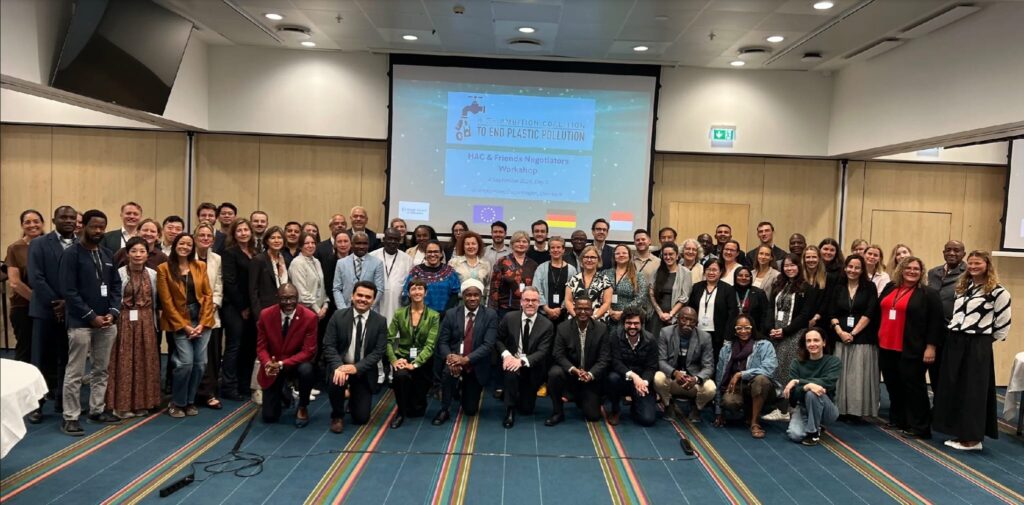
Camila Zepeda Lizama, Head of the International Affairs Unit at SEMARNAT, and Miriam Medel García, Counselor at the Permanent Mission of Mexico to the United Nations, represented Mexico at the High Ambition Coalition’s informal meeting regarding the plastics treaty.
The informal meeting of negotiators from the High Ambition Coalition (HAC) for the Global Plastics Treaty took place in Copenhagen, from September 2 to 4, 2026. The gathering was organized in collaboration with the Nordic Council of Ministers' Nordic Plastics Programme.
During the discussions, emphasis was placed on the need to address plastic pollution across its entire lifecycle, including the reduction of virgin plastic production, sustainable design, and waste management.
|
|
|
Participation in event on reversing the normalization of attacks on healthcare in armed conflicts
|
|
|
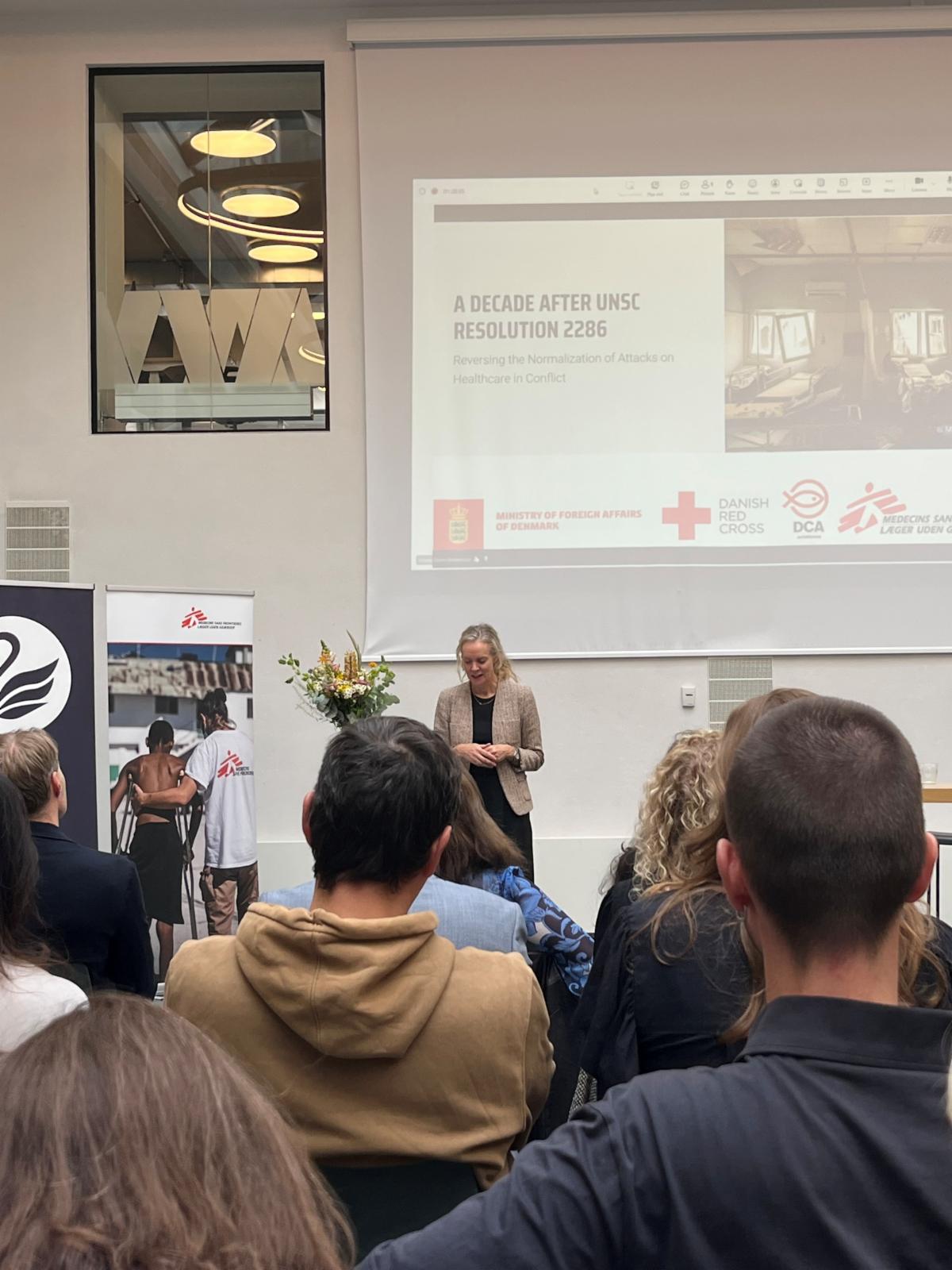
On September 7, Danish Church Aid, the Danish Red Cross, Doctors Without Borders Denmark, and the Danish Ministry of Foreign Affairs organized an event regarding Resolution 2286, titled “Ten years on Reversing the Normalization of Attacks on Healthcare in Armed Conflict”.
Danish Minister for Foreign Affairs Lars Løkke Rasmussen delivered opening remarks (virtually), emphasizing that violations of Resolution 2286 must not become the norm and must entail consequences. Lotte Machon, State Secretary for Foreign Policy at the Ministry of Foreign Affairs, also acknowledged the importance of International Humanitarian Law and underscored the need for it to be respected in practice. She noted that there is very little to celebrate on the resolution's tenth anniversary.
During the three working sessions, experts highlighted the urgent need to protect healthcare services in armed conflicts.
|
|
|
Briefing on the Danish Presidency of the Nordic Council of Ministers 2026
|
|
|
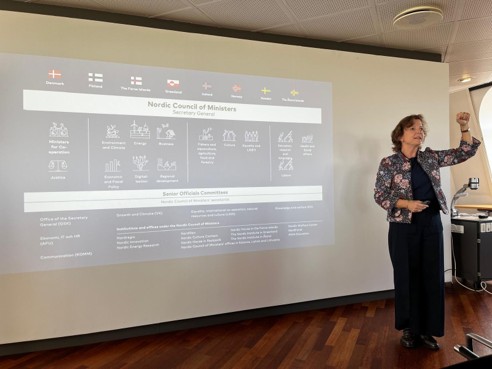
On September 16, Ambassador Pensado attended the presentation on the “Priorities and Policy Ambitions of the Danish Presidency of the Nordic Council of Ministers,” delivered by the Council’s Secretary General, Karen Elleman. The event was organized by the Danish Foreign Policy Society.
The 2026 presidency of the Nordic Council is held by Denmark and the Faroe Islands, as Greenland currently holds the presidency of the Arctic Council. The Nordic Council was established by the 1972 Helsinki Treaty, and work is currently underway to update and modernize it.
|
|
|
Discussion on Geopolitical Dynamics in Greenland
|
|
|
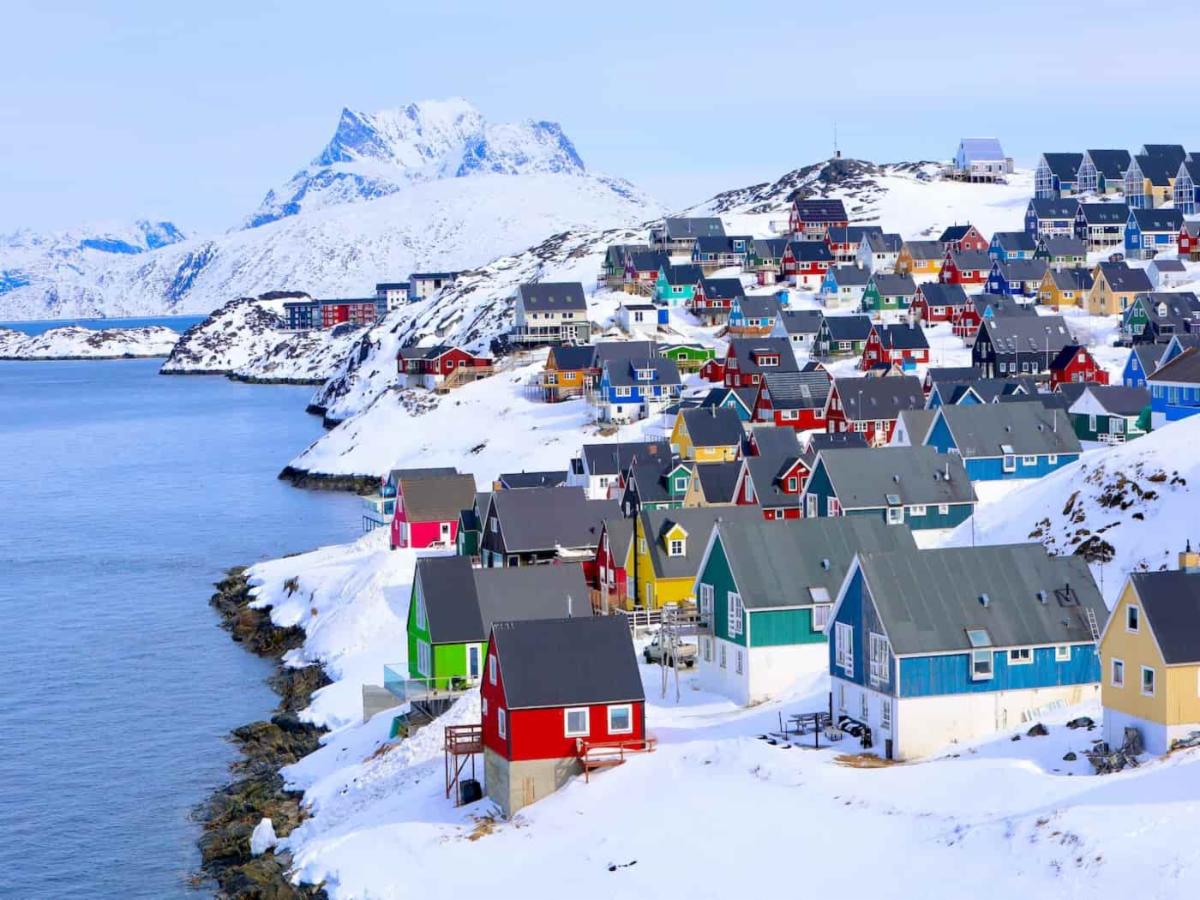
On September 30, Ambassador Pensado attended a working meeting organized by the Embassy of Belgium with the participation of Greenlandic analyst Nick Bæk Heilmann, who gave a presentation on geopolitical dynamics in Greenland.
|
|
|
Congress of Mexican Associations in Europe (FAME)
|
|
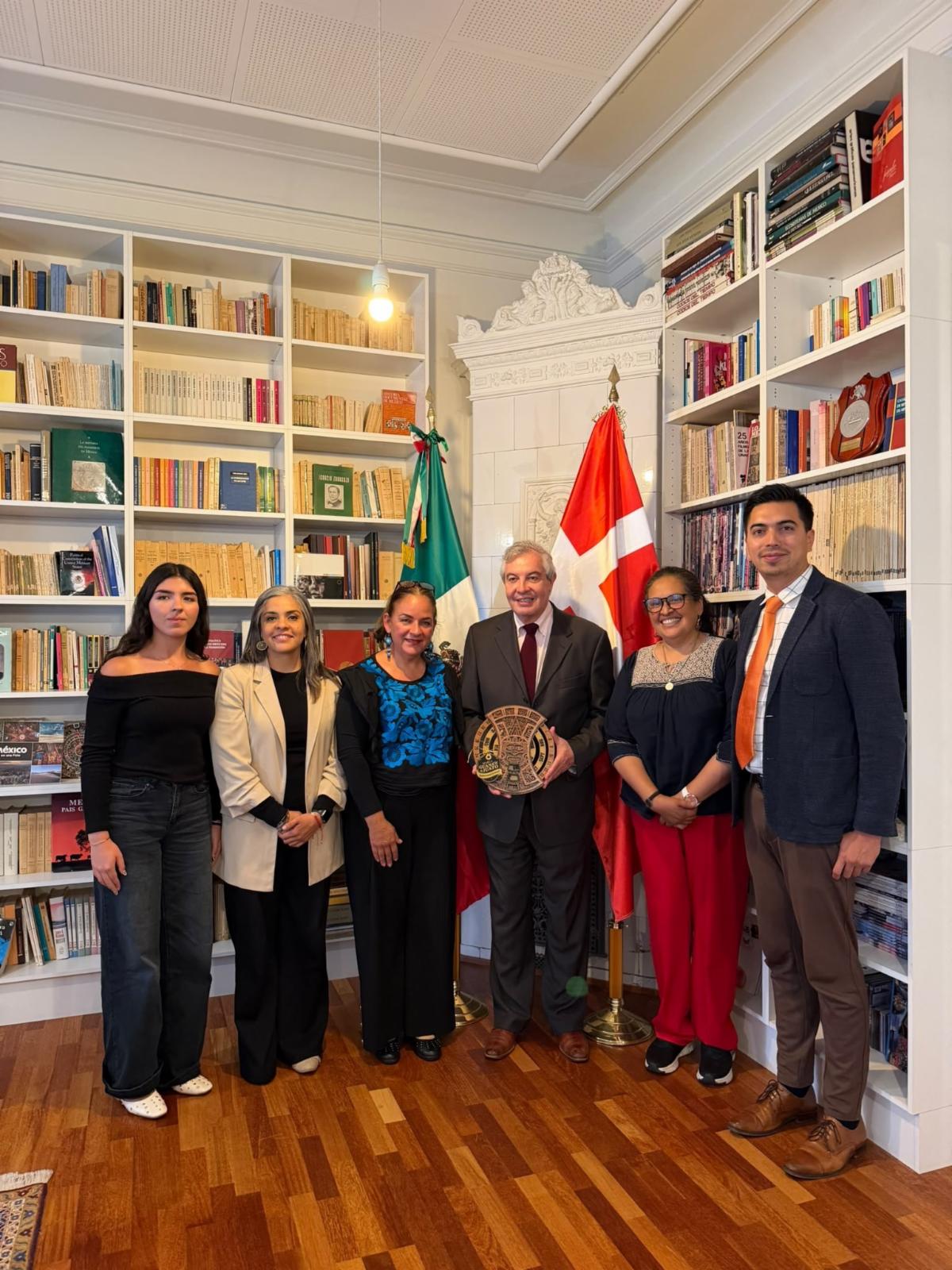
On September 4, the embassy received a visit from the leadership team of the Federation of Mexican Associations (FAME): President Gabriela Moreno de Mirow, Vice President Martha Brito, and Treasurer Lilia Martínez.
The FAME leadership announced that the Federation’s 11th Congress will take place in Turin, Italy, from May 14 to 16, 2027.
The meeting was also attended by Cony Ayde Aceves Montoya, Director of the Developing Sectors Cluster at the Guanajuato Secretariat of Economy; Adriana Álvarez de la Cadena Yáñez, Director of Okumé (Irapuato, Guanajuato); and Lia Maldonado Álvarez de la Cadena, a visual artist from Irapuato, Guanajuato. These individuals participated in the Mexico Festival organized by Xochipilli Kultur in Malmö, Sweden—an organization founded by Ms. Lilia Martínez.
|
|
Lecture by Architect Gabriela Carrillo
|
|
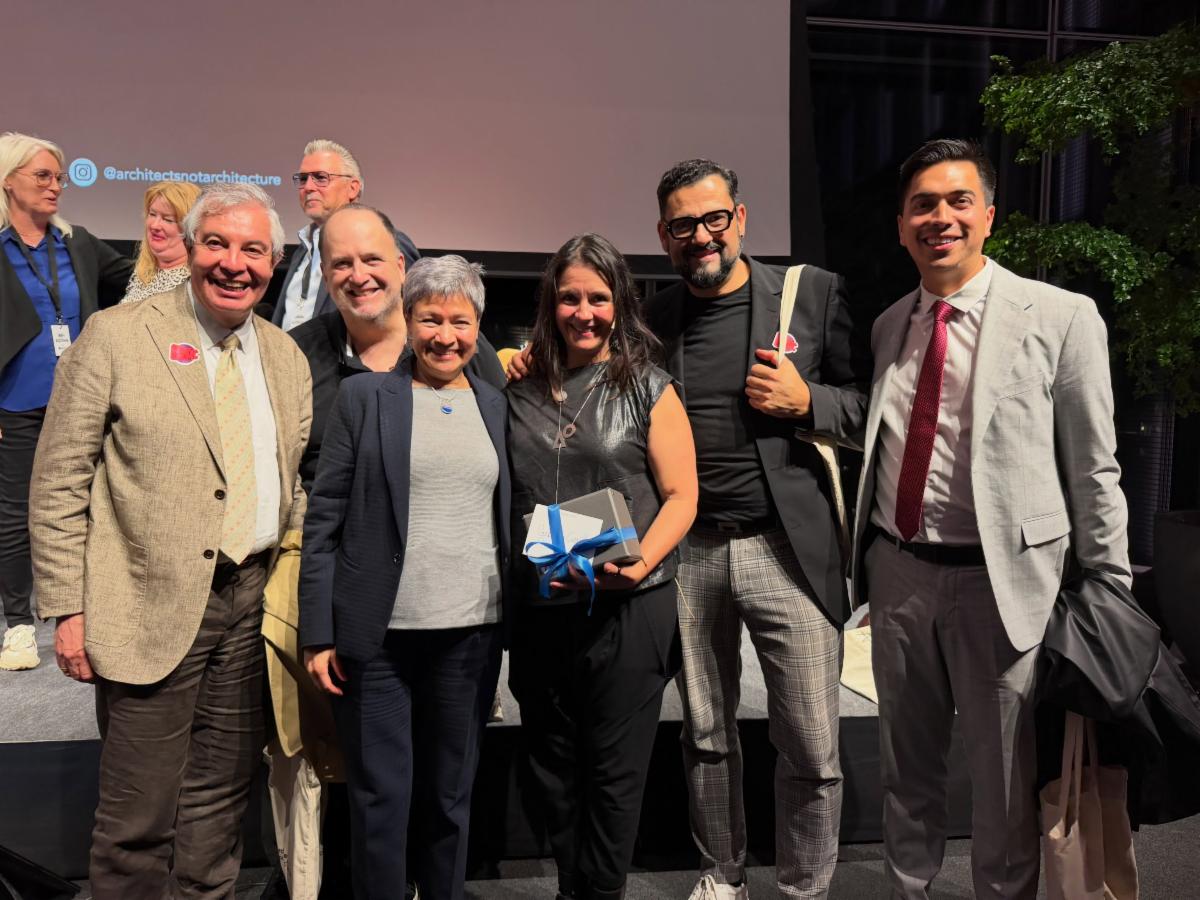
Mexican architect Gabriela Carrillo gave a lecture at the Danish Architecture Center on September 3 as a special guest at the "Architects, not Architecture" event, alongside renowned architects Greta Tiedje (Germany) and Helle Søholt (Denmark).
Gabriela is the founder of Taller Gabriela Carrillo, a collaborative and interdisciplinary studio established in Mexico City in 2019, dedicated to designing significant architectural interventions in both the public and private spheres.
With over two decades of experience, Carrillo boasts a distinguished career that has garnered recognition at both national and international levels.
|
|
Celebration of Mexican Independence Day
|
|
Photo: Hasse Ferrold
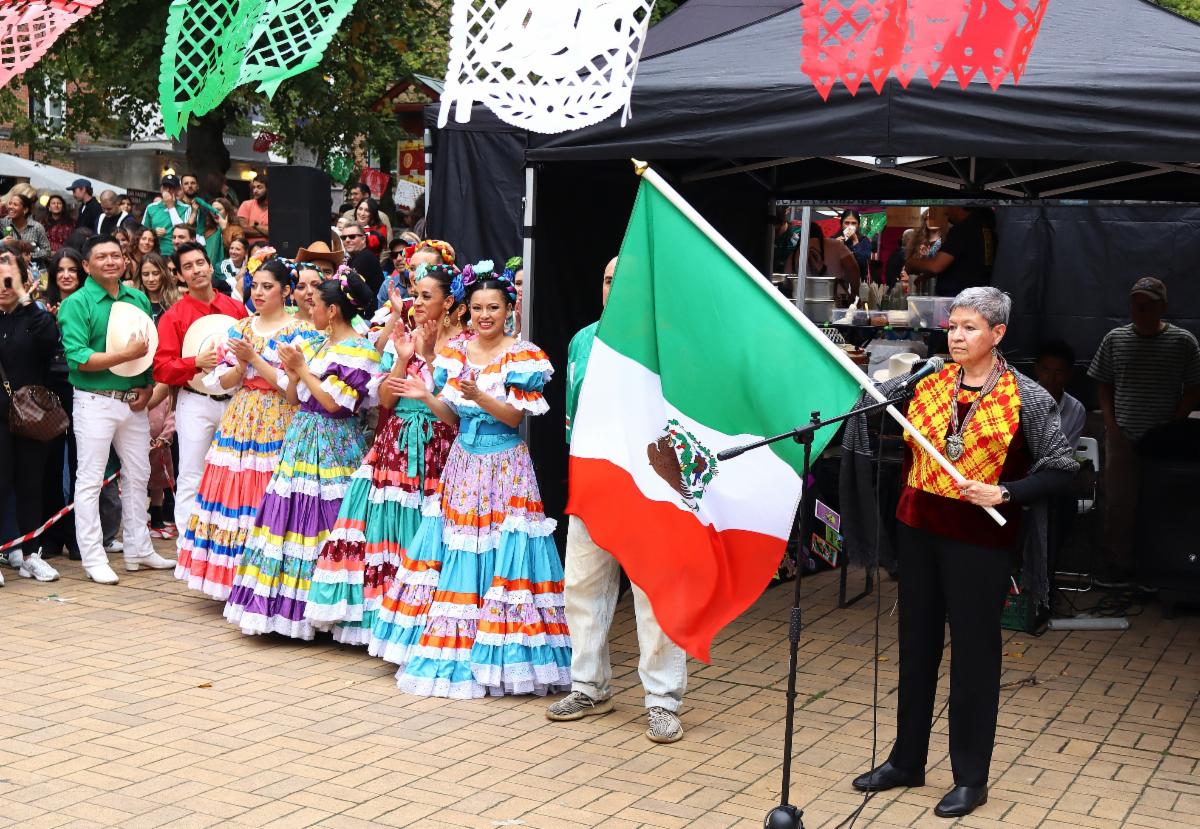
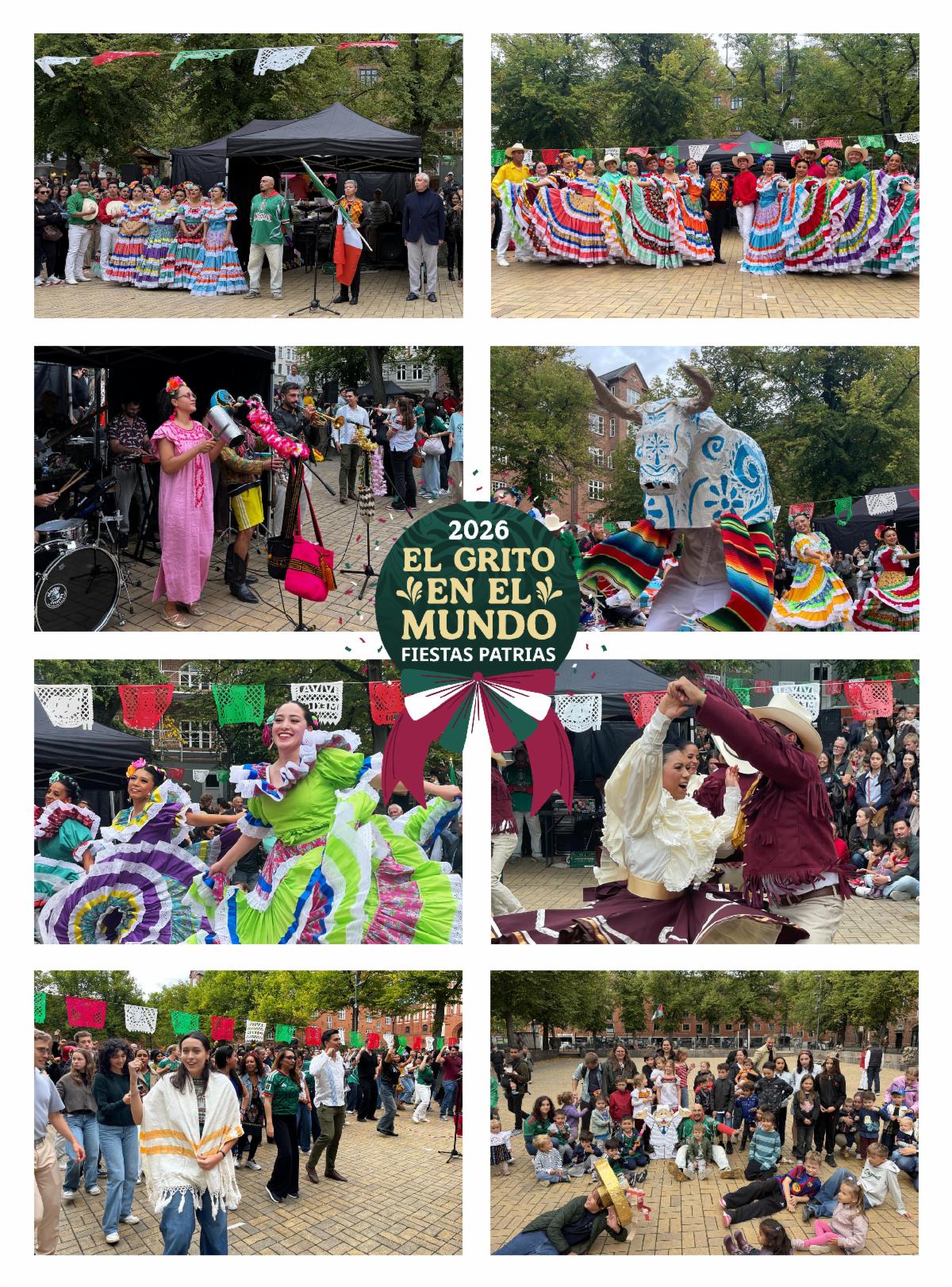
On September 12, the Mexican community and their friends celebrated Mexican Independence Day in a public festival at Blågårds Plads in Copenhagen.
At the invitation of the event organizers, Ambassador Pensado led the traditional official *Grito de Dolores* ceremony, during which cheers were raised for the nation's heroes.
As happens every year, there were games for children, piñatas, music, dancing, food stalls, and handicrafts stand. The event featured performances by the folk-dance group MexiDansk, the duo Los Kanijos, Trypical Cumbia, and DJ “¿Y si sí?”.
The event drew a large crowd comprising members of the Mexican and Danish communities, as well as admirers of our culture from other nationalities.
|
|
|
Mexico at Musikfilm Festival
|
|
|
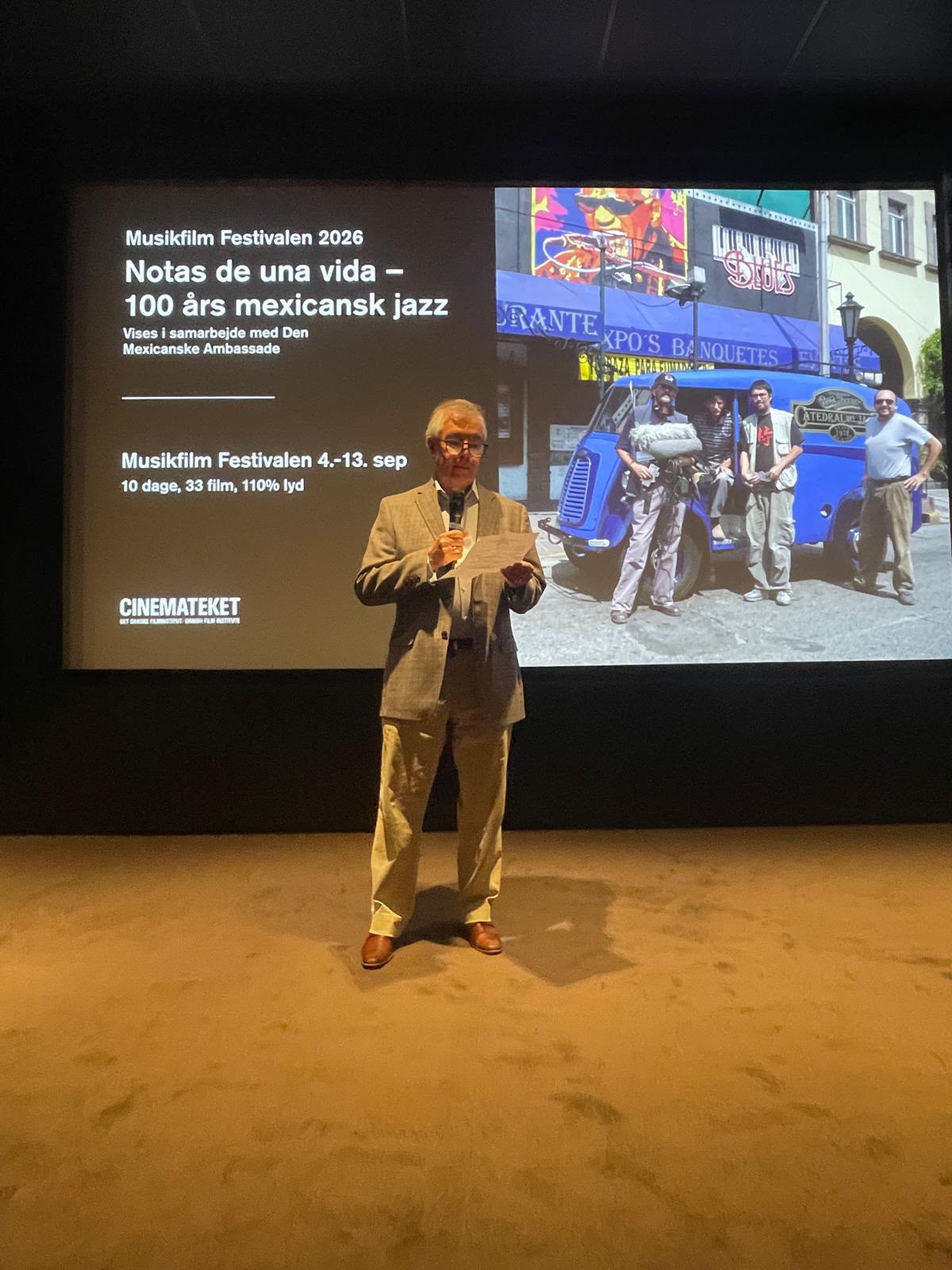
On September 9, the documentary *Notas de una Vida, 100 años del jazz en México* (Notes of a Life: 100 Years of Jazz in Mexico) by director Roberto Bolado was screened at the Cinemateket in Copenhagen as part of the 14th edition of the Musikfilm Festival.
In his presentation of the film, Minister Enrique Palos highlighted the importance of Mexican documentary filmmaking and the history of foreign musical genres that Mexico adopted and produced over time.
The production of the documentary was completed in 2023; it is an independent film that took director Bolado 18 years to produce.
|
|
Screening of the documentary "Tan cerca de las nubes"
|
|
|
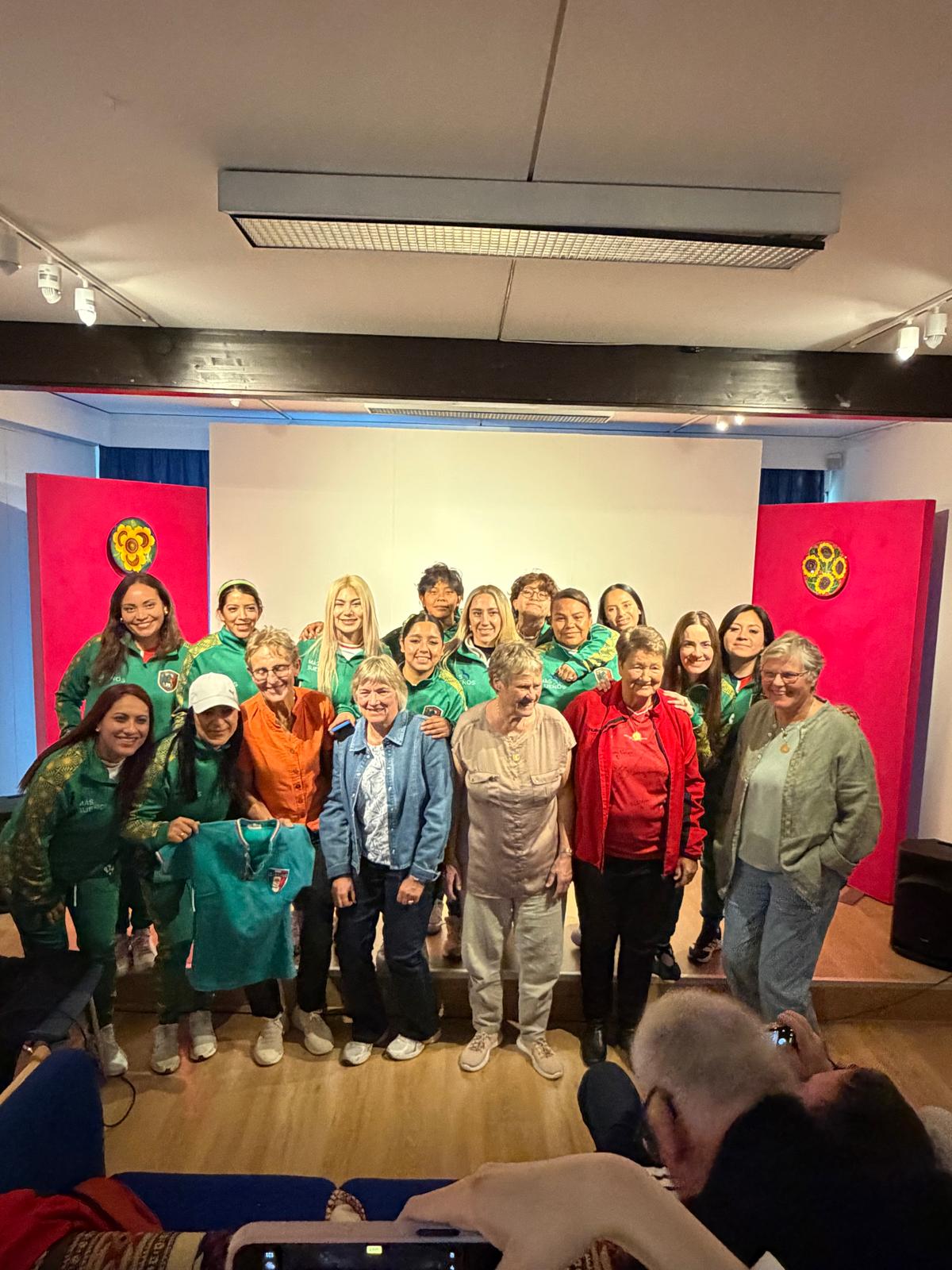
On September 25, the documentary *Tan cerca de las nubes* (So Close to the Clouds), directed by Manuel Cañibe, was screened at the Cultural Institute of Mexico as part of the monthly film club organized by the embassy.
A highlight of the event was the participation of five veterans from the Danish women's national football team—champions of the 1971 World Cup in Mexico—who attended with their families, alongside the youth women's football team from the organization "Más Sueños." This group had traveled to Denmark to represent Mexico in the "Girl Power" international football tournament, organized by Afghan activist Khalida Popal.
"Más Sueños" is a Mexican non-profit civil association that promotes equality, prevents violence, and combats discrimination.
The exchange took place in an atmosphere of great enthusiasm and emotion, allowing both generations to share experiences, memories, and perspectives on the evolution of women's football.
|
|
|
Beltrán-Durán Duo Concert
|
|
|
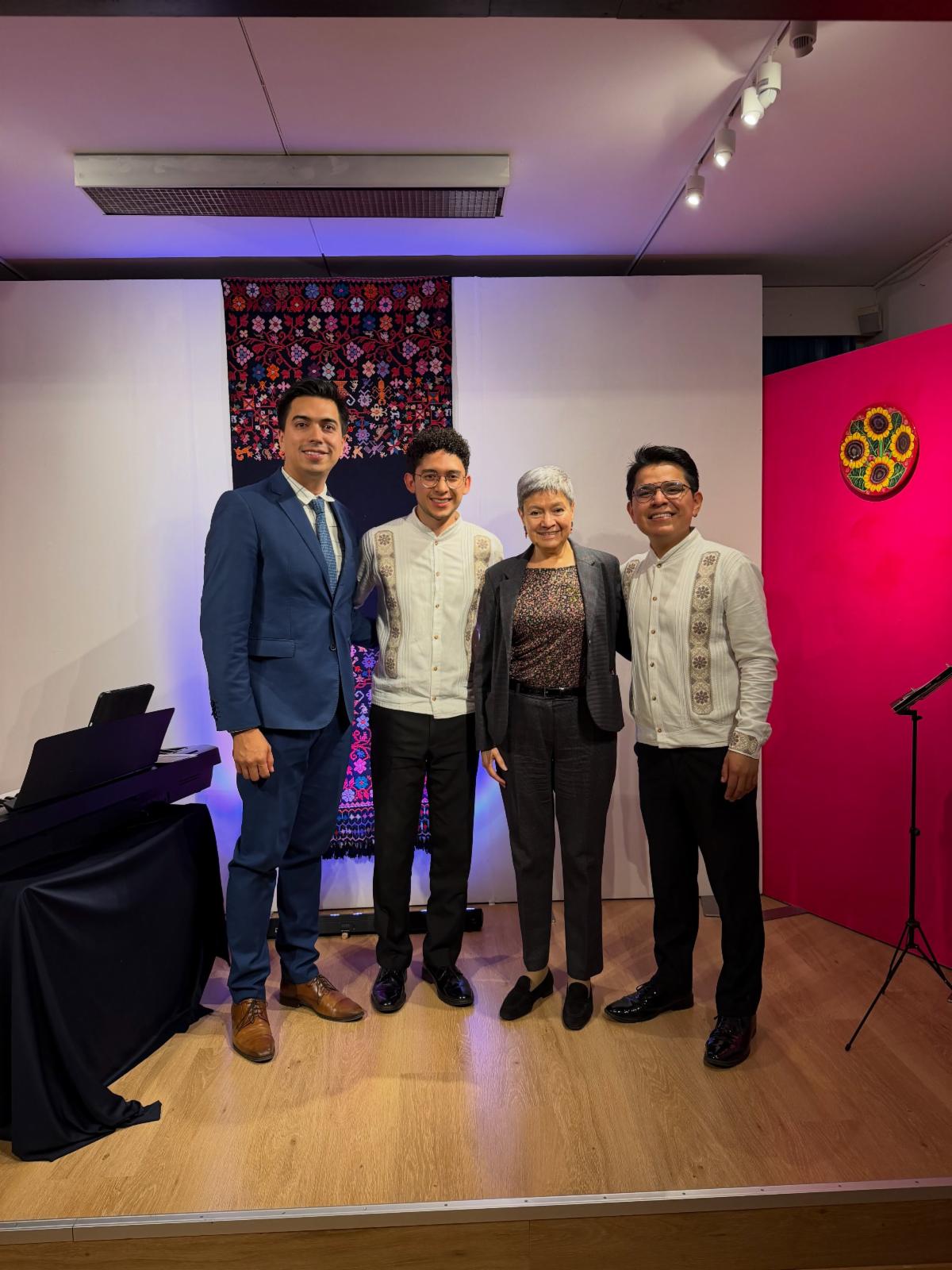
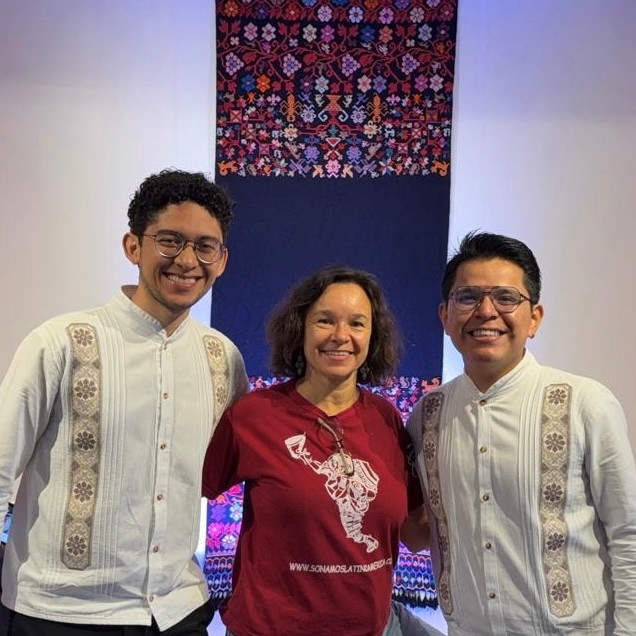
On September 18, the "Amor-Es: México" recital featuring the Beltrán-Durán duo took place at the Mexican Cultural Institute in the city, as part of their European tour.
The recital featured a repertoire of 23 songs by Mexican composers from various eras, performed by tenor Luis Itzcóatl Beltrán and accompanied on the piano by maestro Mauricio Beltrán.
The audience had the opportunity to speak with the artists at the end of the event.
|
|
|
Reykjavik Latin American Film Festival
|
|
|
The 4th edition of the Reykjavik Latin American Film Festival opened on September 15, organized by compatriots Hugo Llanes and Tania Zarak Quintana in collaboration with the Bíó Paradís cinema and with the support of this embassy. The event, which featured screenings of films from various Latin American countries, took place from September 15 to 19.
The inauguration took place as part of the celebrations marking the 216th anniversary of Mexico's independence; on this occasion, Ambassador Pensado sent a virtual greeting to the Mexican community in Reykjavík and to the Icelanders who attended the film screening and the festival, whose program this year is dedicated to women in cinema.
Following the screening of the film *Sad Girlz* by Mexican director Fernanda Tovar, the national holiday celebrations continued.
The evening brought together members of the Mexican community in Iceland and featured a musical set by DJ Kumbiavík Collective, along with Mexican appetizers provided by La Poblana Reykjavík and special cocktails. Thus, the cinematic event transitioned into a gathering to celebrate Mexican culture and traditions.
|
|
|
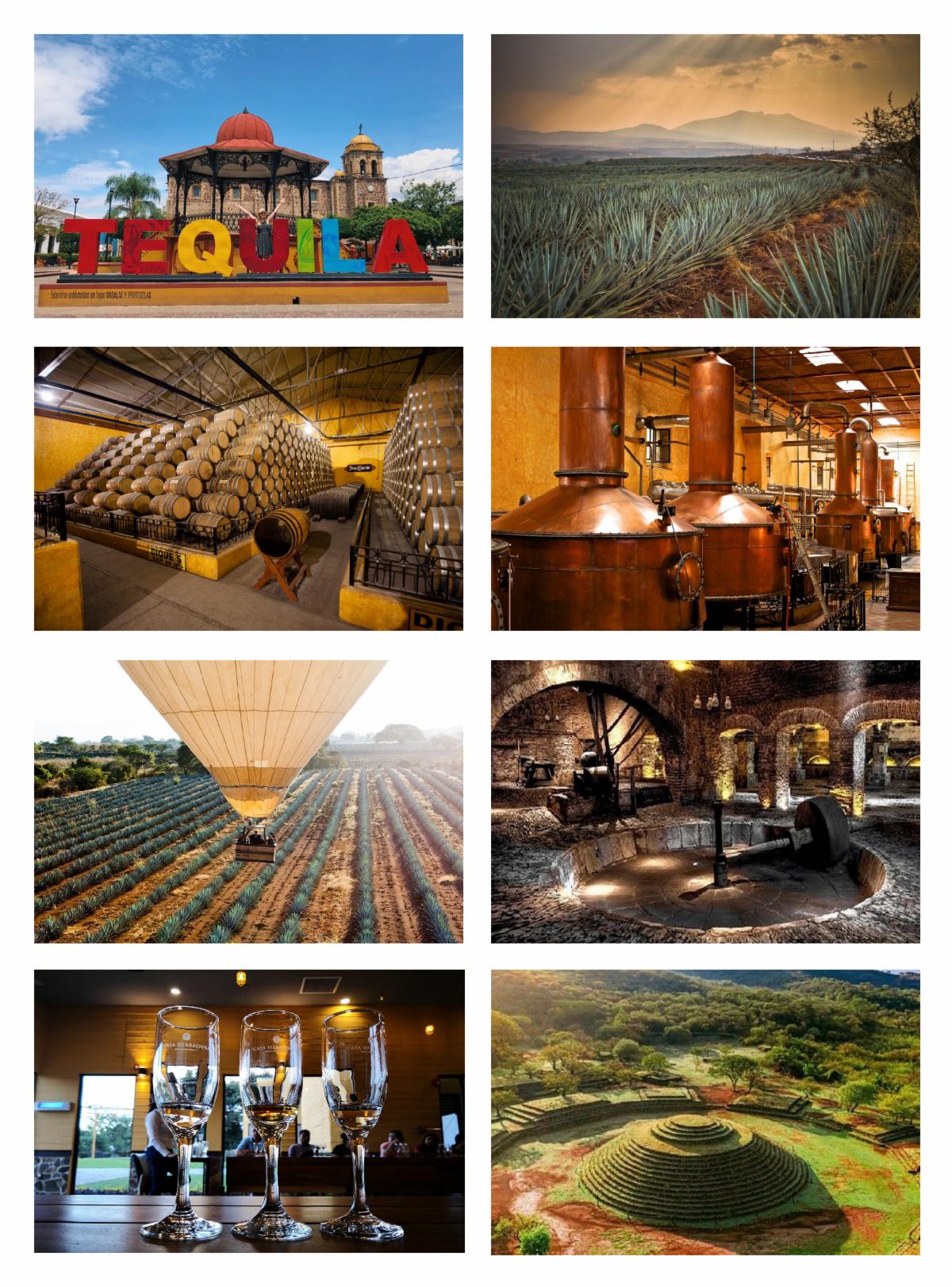
The Tequila Route, located in the state of Jalisco, Mexico, is an excellent tourist option for those who wish to learn about the culture, history, gastronomy, and traditions of our country. This route revolves around the Magical Town of Tequila and other municipalities in the region, such as Amatitán, El Arenal, Magdalena, Ahualulco de Mercado, and Teuchitlán. Its main attraction is tequila, one of the drinks that most represents Mexican identity.
One of the most interesting aspects of the route is the Agave Landscape, formed by extensive fields of blue agave located at the foot of the Tequila Volcano. This landscape, along with the old industrial facilities related to tequila production, was recognized by UNESCO as a World Heritage Site in 2006, due to its cultural and historical importance.
During the tour, visitors can learn firsthand how tequila is produced, from the cultivation and harvesting of the agave to its cooking, fermentation, distillation, and aging. Visits to distilleries offer a glimpse into the centuries-old tradition behind this beverage. Educational tastings are also available, providing insights into the work of producers and agave harvesters.
Besides tequila, the region boasts numerous cultural and natural attractions. In the Magical Town of Tequila, visitors can explore the Parish of Santiago Apóstol, the National Tequila Museum, the Juan Beckmann Gallardo Cultural Center, and historic haciendas and distilleries. Activities include strolling through agave fields, horseback riding, sightseeing tours, and hiking.
Another point of interest is Teuchitlán, home to the Guachimontones archaeological site, which complements the tequila experience with knowledge of the ancient cultures that inhabited this region. Furthermore, Jalisco's cuisine, with dishes like birria, pozole, and tostadas, contributes to a truly complete travel experience.
|
|
|
Upcoming events
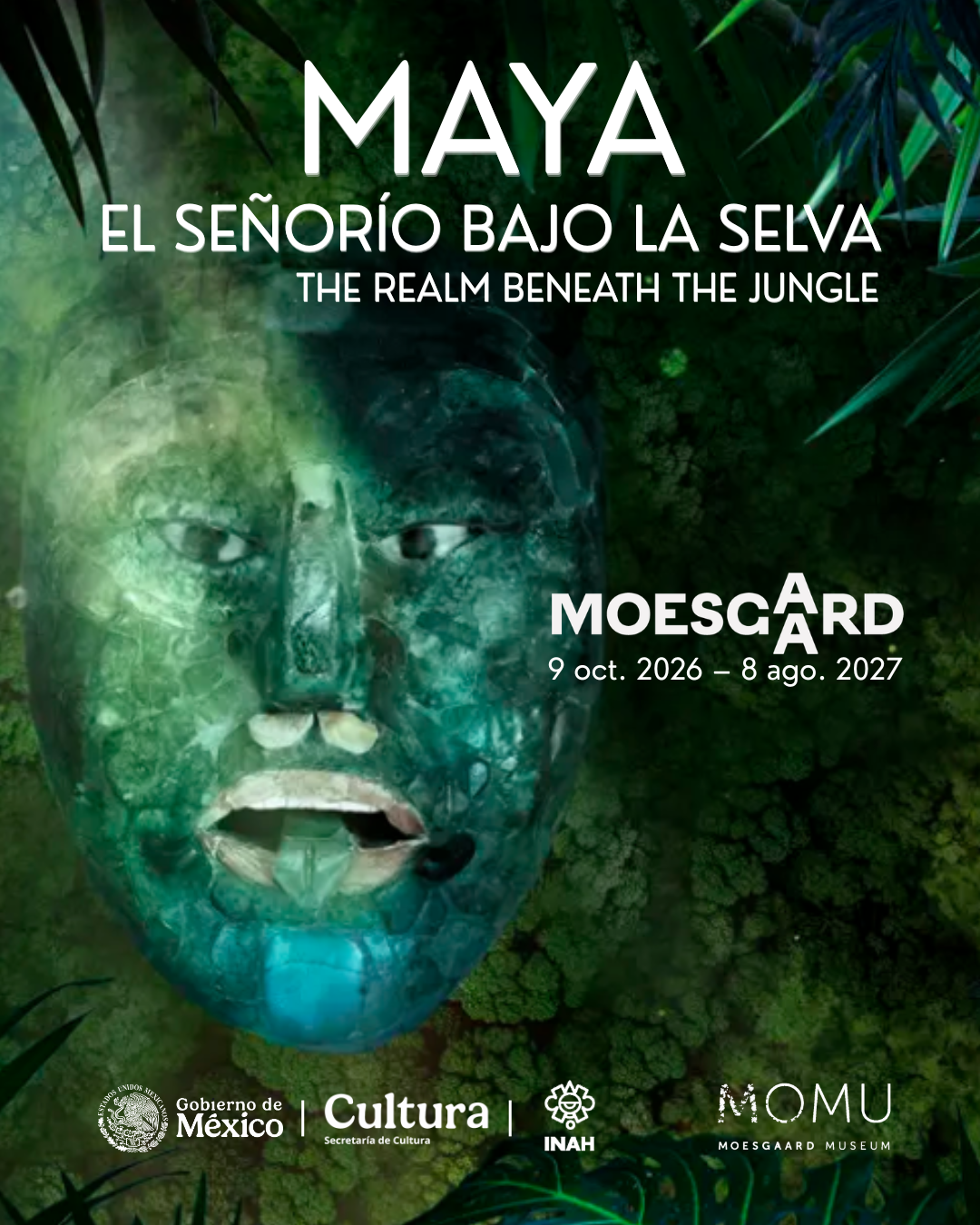
October 9
Opening of the exhibition “Maya: The realm beneath the jungle” at the Moesgaard Museum in Aarhus.
Don’t miss this magnificent exhibition on Maya culture —one of the great civilizations in world history.
More information here.
|
|
|
October 24
Puppet show "Nacho Calavera
and the Lost Colors" by Mil Rostros Teatro
A festive adventure for the whole family that celebrates color, imagination, and Mexico's cultural heritage.
Saturday, October 24
1o:00 a.m.
Instituto Cultural de México.
|
|
|
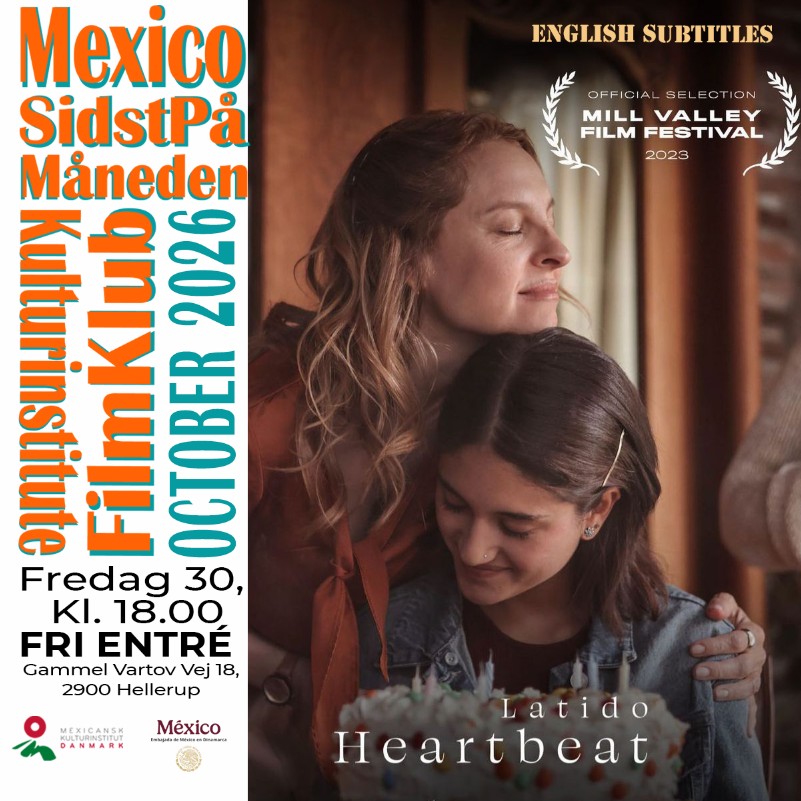
October 30
Film club screens the Mexican film “Latido”
Don't miss this drama —filmed in 2023 and directed by Katina Medina Mora—which explores the complexities of motherhood through the lives of two women with contrasting realities. Actresses Marina de Tavira and Camila Calónico lead the cast.
|
|
|
September 2026 - January 2027
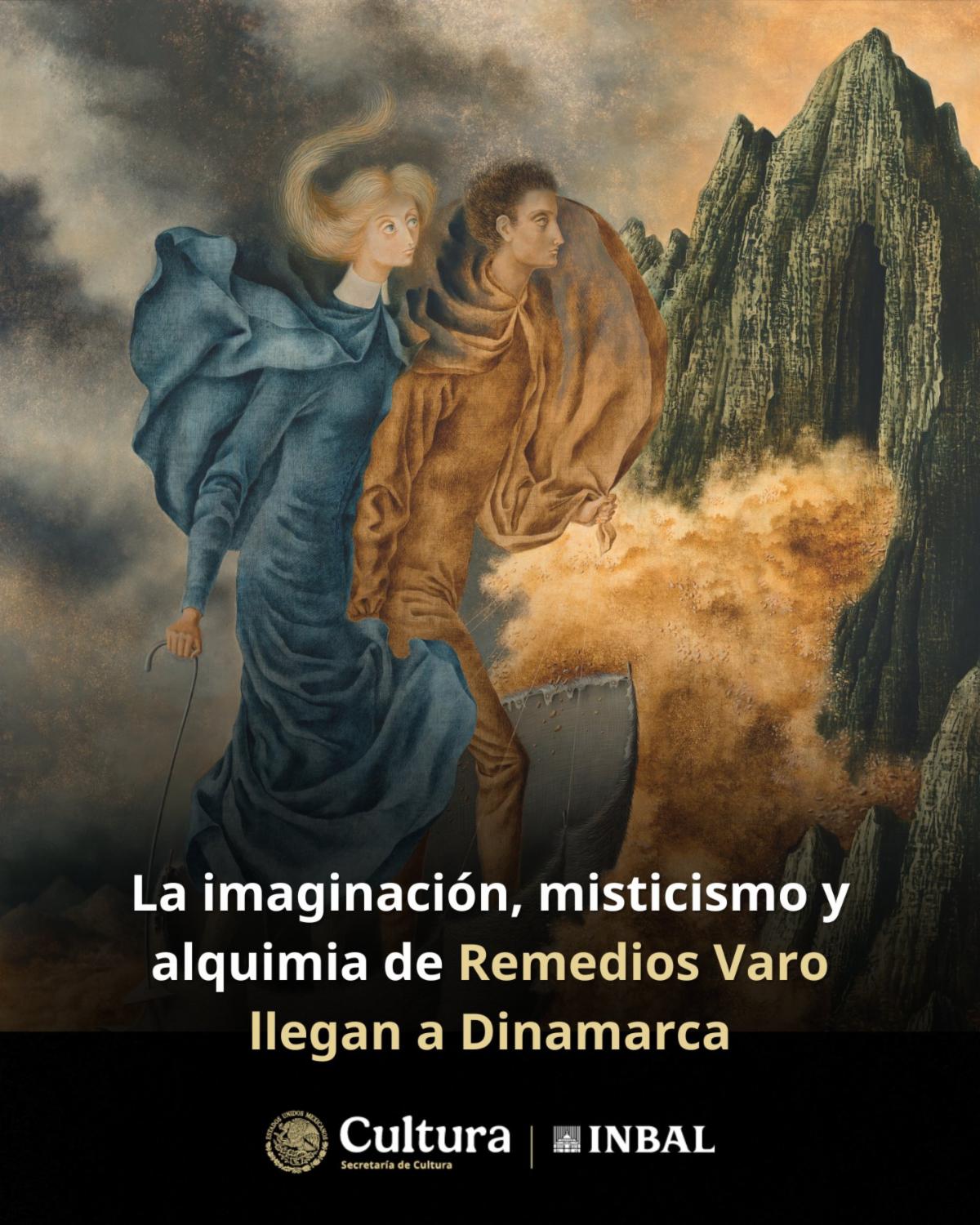
Remedios Varo at the Louisiana Museum
Don't miss the fascinating exhibition of surrealist painter Remedios Varo at the Louisiana Museum. Although Spanish by birth, Mexico became her adopted home and the place where she created most of her celebrated work. The exhibition features over 70 pieces, spanning both her early period in Barcelona and Paris and her most productive years in Mexico during the 1950s and early 1960s.
|
|
|
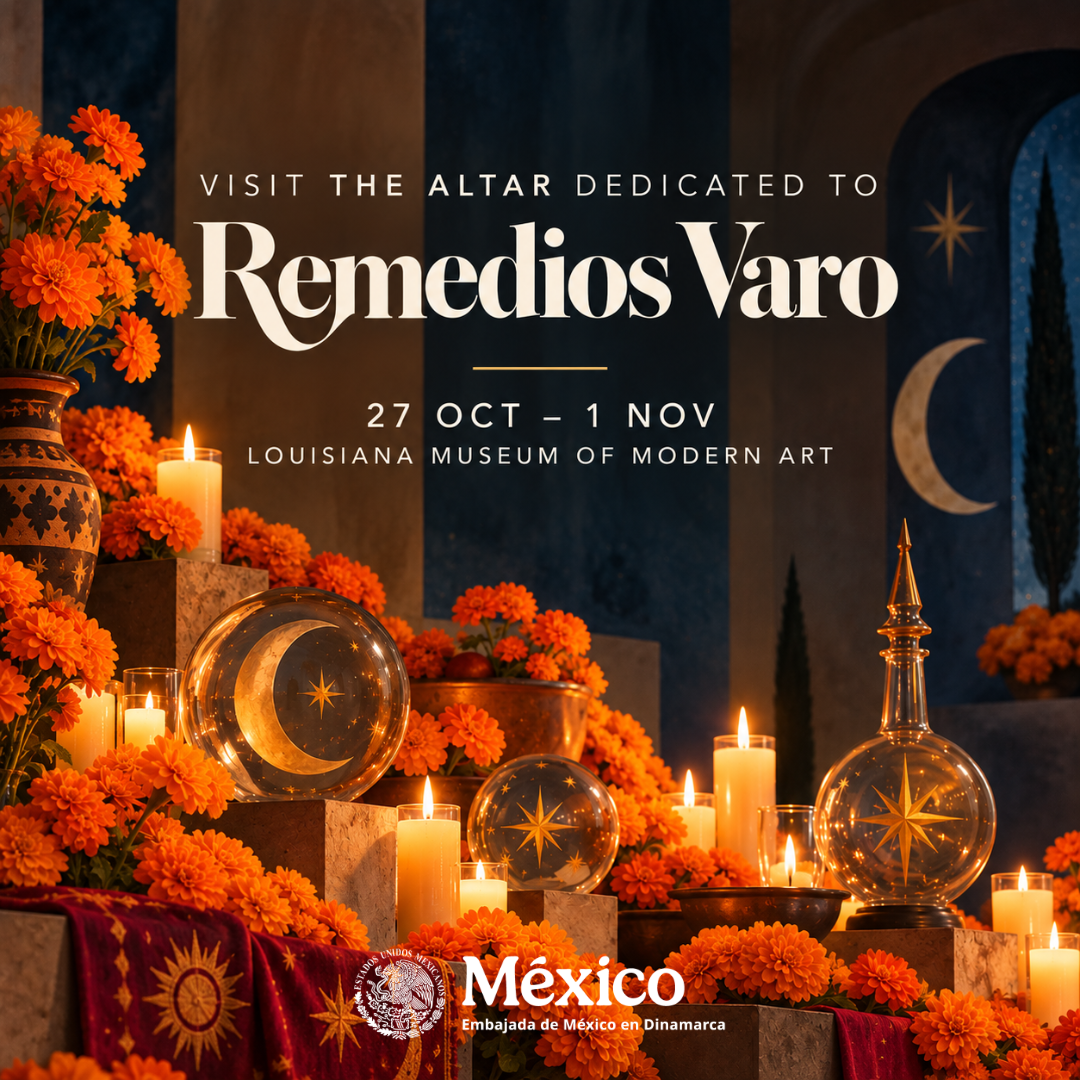
Additionally, the Embassy of Mexico, in collaboration with the Louisiana Museum, presents a Day of the Dead altar to commemorate one of Mexico's most deeply rooted traditions. The altar is on display at the museum starting October 27th. to November 1st. In addition to workshops for children, Professor Jesper Nielsen from the University of Copenhagen will give a talk about this traditional celebration.
|
|
|
November 2
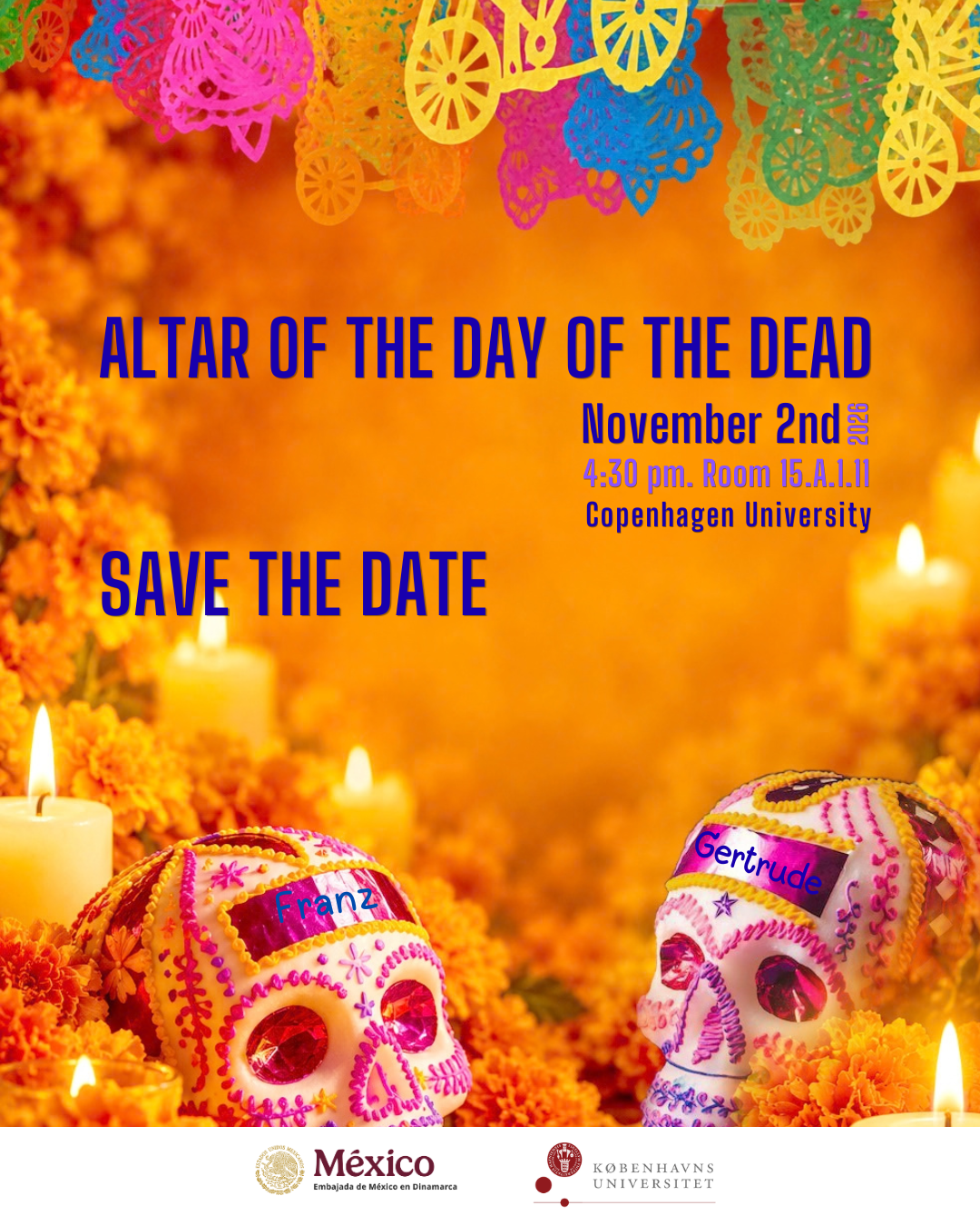
Day of the Dead altar at the University of Copenhagen
The University of Copenhagen, in collaboration with the embassy, will set up a Day of the Dead altar, as every year. Don't miss it!
|
|
|
|